A water heater is one of those household systems that usually receives very little attention until something changes.
The shower suddenly turns cold. Hot water runs out faster than usual. A strange popping sound starts coming from the utility room. Or a small puddle appears beneath the tank.
Some water-heater problems are relatively minor. Others can indicate a leaking tank, malfunctioning control, combustion problem, excessive pressure, or another condition that should be addressed promptly.
The challenge for homeowners is knowing the difference.
There are several safe observations and basic checks you can make without taking apart the appliance. Knowing what to look for can help you describe the problem accurately, avoid unnecessary damage, and decide when professional service makes sense.
1. You Have No Hot Water
A complete loss of hot water is one of the most obvious signs that something is wrong, but the possible cause depends partly on the type of heater.
Electric Water Heaters
An electric water heater relies on heating elements, thermostats, electrical connections, and a dedicated circuit.
Before assuming that the heater itself has failed, check whether:
- the rest of the home has electricity;
- the water-heater breaker has tripped;
- there is an obvious power interruption.
If a breaker has tripped, simply resetting it repeatedly is not a repair. A breaker that trips again may indicate an electrical problem that needs diagnosis.
Homeowners should not remove electrical covers or test internal components unless they are qualified to work safely around high-voltage equipment.
Gas Water Heaters
Gas-fired equipment may stop producing hot water because of problems involving ignition, gas supply, burner operation, controls, or venting.
Modern systems may use electronic ignition rather than a traditional standing pilot.
If you smell gas, do not attempt troubleshooting. Follow the gas utility’s emergency instructions, leave the area when appropriate, and seek qualified assistance.
2. Hot Water Runs Out Much Faster Than Before
A water heater that still works but suddenly produces less usable hot water deserves attention.
Possible explanations include:
- one heating element failing in an electric unit;
- thermostat problems;
- sediment accumulation;
- increased household demand;
- a damaged dip tube on some tank designs;
- reduced burner performance;
- equipment that is simply too small for current demand.
First Ask Whether Household Use Has Changed
Before assuming equipment failure, think about recent changes.
Did someone take a longer shower?
Are several people now using hot water at the same time?
Was a large soaking tub recently installed?
Has household occupancy increased?
If demand has remained the same but hot-water capacity has noticeably declined, the equipment may need inspection.
3. Water Temperature Keeps Changing
Water that alternates between very hot and lukewarm can be frustrating and sometimes unsafe.
Potential causes extend beyond the water heater itself.
Temperature changes may involve:
- heater controls;
- thermostats;
- heating elements;
- mineral buildup;
- fixture mixing valves;
- plumbing crossover;
- simultaneous household demand.
Check More Than One Fixture
One useful homeowner test is to compare several fixtures.
If only one shower has unstable temperature while every other faucet works normally, the problem may be located at that fixture.
If temperature problems occur throughout the home, the water heater or broader plumbing system becomes a more likely place to investigate.
This simple distinction can save considerable troubleshooting time.
4. The Water Heater Makes Popping or Rumbling Sounds
Storage water heaters are not completely silent, but new or increasingly loud noises should not automatically be dismissed as normal.
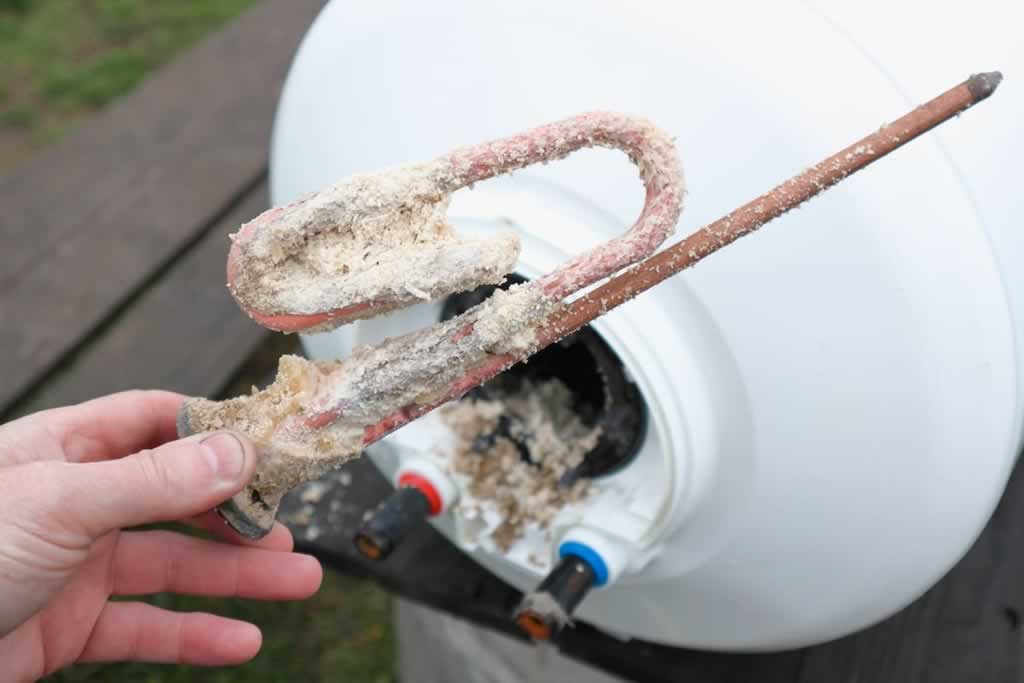
A common explanation for popping or rumbling in a tank-style heater is sediment accumulation near the bottom of the tank.
Why Sediment Can Make Noise
Minerals and debris can settle inside a storage tank over time.
As the burner or heating element heats the water, steam bubbles may form beneath or around accumulated material and produce popping or crackling sounds.
Water conditions vary widely between homes, so sediment accumulation does not happen at the same rate everywhere.
Regular maintenance should follow the manufacturer’s instructions for the specific model.
A small amount of operating noise may not indicate imminent failure, but a heater that becomes progressively louder deserves evaluation.
5. Rust-Colored or Discolored Hot Water Appears
Discolored water can originate from several places in the plumbing system.
One useful question is whether discoloration occurs in:
- hot water only;
- cold water only;
- both hot and cold water.
If Only Hot Water Is Affected
When cold water is clear but hot water repeatedly appears rusty or discolored, the water heater becomes one possible source.
Depending on system age and design, internal corrosion, sediment, or other conditions may need to be evaluated.
If Both Hot and Cold Water Are Affected
The issue may be related to:
- the municipal supply;
- well water;
- household piping;
- recent plumbing work;
- disturbances in the water system.
Do not assume every discoloration problem means the water heater needs replacement.
The pattern is important.
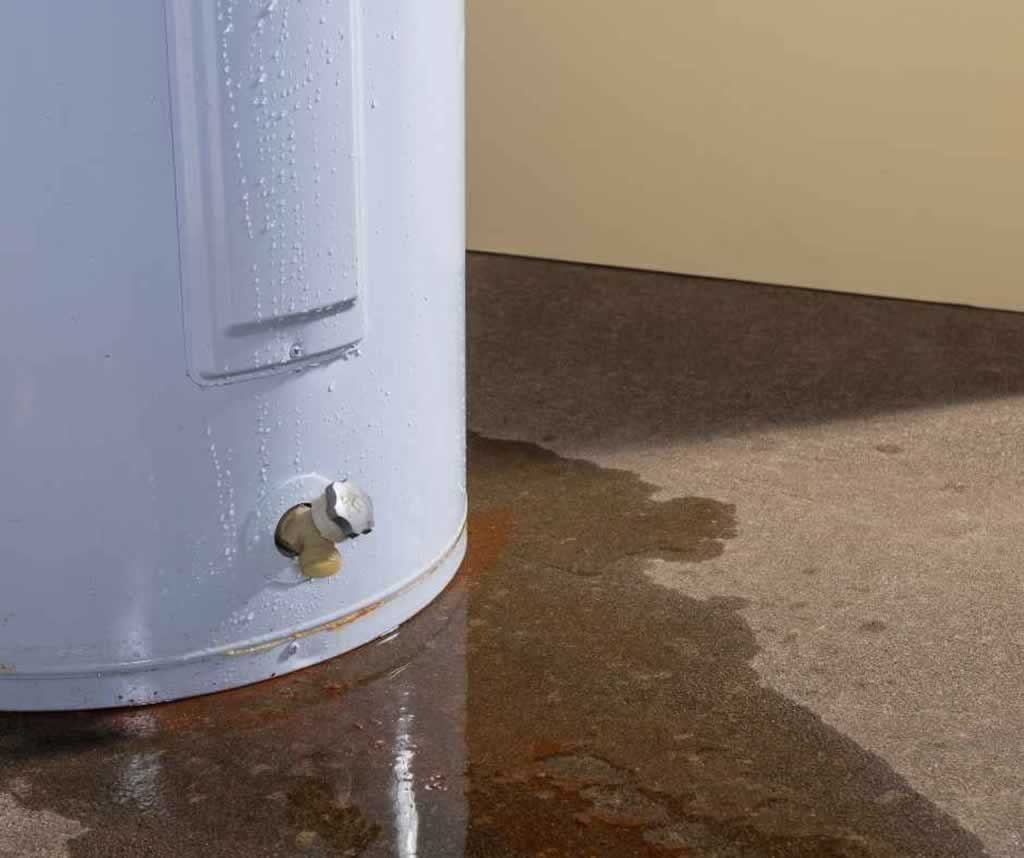
6. Water Is Leaking Around the Heater
Water around a water heater should always be investigated.
However, finding water near the equipment does not necessarily mean the tank itself is leaking.
Potential sources include:
- supply connections;
- shutoff valves;
- flexible connectors;
- drain valve;
- relief-valve piping;
- nearby plumbing;
- condensate from high-efficiency equipment;
- the tank itself.
Start by Finding Where the Water Begins
Without disassembling equipment, visually inspect the area.
Is water dripping from a connection above the tank?
Does a valve appear wet?
Is moisture coming from underneath the tank body?
Is another pipe nearby leaking onto the heater?
A leaking fitting and a leaking storage tank can require very different solutions.
A Leaking Tank Is a Serious Sign
If water is escaping from the tank body itself, repair may not be practical. Internal tank failure often means replacement needs to be considered.
Do not wait for a small tank leak to become a major release of water.
7. The Temperature and Pressure Relief Valve Is Discharging
Storage water heaters commonly include a temperature and pressure relief valve, often called a T&P valve.
It is an important safety device.
The valve is designed to relieve dangerous conditions involving excessive temperature or pressure.
Do Not Cap or Plug the Discharge Pipe
If water is regularly coming from the relief-valve discharge pipe, the solution is not to block the pipe.
Possible underlying issues may involve:
- excessive pressure;
- thermal expansion;
- temperature controls;
- the valve itself.
Because this is a safety component, repeated discharge deserves proper diagnosis.
A homeowner may notice the symptom, but modifying or defeating the safety device is not an appropriate DIY repair.
8. The Heater Needs to Be Reset Repeatedly
One reset may restore operation after an unusual event.
A heater that continually requires resetting is telling you something else.
Repeated resets may indicate:
- electrical problems;
- overheating;
- failed controls;
- ignition problems;
- safety devices shutting the system down.
The same principle applies to modern water heaters that repeatedly display an error code.
Record the Error Before Resetting
If the unit has a digital display, write down the error code.
Take a photo if necessary.
That information can significantly help diagnosis because different manufacturers use codes to identify specific operating faults.
Do not fall into the habit of clearing the same fault repeatedly without determining why it returns.
9. Your Water Heater Is Becoming Expensive to Repair
Not every problem should automatically lead to replacement.
Many components can be repaired.
But repair decisions change as equipment ages.
Consider the overall pattern:
- How old is the heater?
- Has it needed several recent repairs?
- Is the tank itself in good condition?
- Are replacement parts readily available?
- Is the unit correctly sized for the household?
- Are efficiency and operating costs becoming concerns?
- Is a major component now failing?
One relatively inexpensive repair on an otherwise sound heater can make sense.
Repeatedly investing in an aging system with several developing problems may not.
Safe Checks Homeowners Can Make
Before scheduling service, gather as much useful information as possible.
You can usually check the following without disassembling the heater.
Check Whether the Problem Affects the Entire Home
Test several hot-water fixtures.
This helps determine whether the issue is:
- fixture-specific;
- limited to one branch;
- likely related to the water heater.
Note the Water Temperature
Is the water:
- completely cold;
- slightly warm;
- excessively hot;
- inconsistent?
That distinction matters.
Look for Visible Water
Inspect the floor and visible connections around the heater.
Do not remove covers or reach into electrical or combustion compartments.
Listen for Unusual Sounds
Record when the sound occurs:
- while heating;
- immediately after a hot-water draw;
- continuously;
- only during burner operation.
Record Error Codes
Write down any displayed code before resetting the system.
Check the Equipment Label
Knowing the:
- manufacturer;
- model;
- fuel type;
- approximate age
can make troubleshooting much faster.
Repairs Homeowners Should Generally Avoid
Online tutorials can make complicated water-heater work look deceptively simple.
However, water heaters combine several potentially hazardous systems.
Depending on equipment type, these can include:
- natural gas or propane;
- high-voltage electricity;
- combustion exhaust;
- very hot water;
- pressurized plumbing;
- safety controls.
Homeowners without appropriate training should avoid modifying:
- gas valves;
- burners;
- venting systems;
- internal wiring;
- heating elements;
- pressure-safety devices.
There is a significant difference between observing a symptom and safely repairing its cause.
When It Makes Sense to Call a Professional
Professional diagnosis becomes particularly important when:
- the tank is leaking;
- gas odor is present;
- a breaker repeatedly trips;
- the relief valve repeatedly discharges;
- the unit shows recurring fault codes;
- burner or ignition problems persist;
- there is no hot water after basic checks;
- water temperature becomes dangerously high;
- electrical components appear damaged;
- the cause of the problem is unclear.
Homeowners dealing with recurring or more complicated failures can use professional water heater repair services to diagnose whether the problem involves maintenance, a repairable component, plumbing conditions, or a heater that is nearing the end of its useful life.
A proper diagnosis is especially valuable before replacing equipment. A hot-water problem can occasionally originate elsewhere in the plumbing system, and replacing the heater without confirming the cause creates unnecessary expense.
Repair or Replace? Consider More Than Age
Age is important, but it should not be the only factor in the decision.
Repair May Make Sense When:
- the tank is structurally sound;
- the problem is isolated to a replaceable component;
- repairs have not become frequent;
- the equipment still meets household demand;
- repair cost is reasonable compared with replacement.
Replacement Becomes More Attractive When:
- the tank itself is leaking;
- corrosion is significant;
- failures are becoming frequent;
- major repairs approach replacement cost;
- the system no longer meets household hot-water needs;
- parts are difficult to obtain.
Replacement also creates an opportunity to reconsider whether the same equipment type still makes sense.
A household may compare conventional storage, tankless, heat-pump, gas, or electric options depending on its infrastructure and priorities.
Preventive Maintenance Can Reduce Surprises
A water heater can fail unexpectedly, but many systems benefit from routine attention.
Maintenance requirements vary by equipment and manufacturer, but may include:
- checking for leaks;
- inspecting visible connections;
- following recommended tank-flushing procedures;
- servicing tankless heat exchangers where applicable;
- maintaining proper water treatment where needed;
- checking combustion systems professionally;
- keeping the area around the unit accessible.
Keep maintenance records.
A simple record of service dates, previous repairs, and recurring symptoms can make future repair-versus-replacement decisions much easier.
Don’t Ignore Small Changes
One of the most useful habits a homeowner can develop is noticing when equipment begins behaving differently.
A new sound.
Slightly less hot water.
An occasional fault code.
Moisture around a fitting.
None of those symptoms automatically means the water heater is about to fail.
But changes provide information.
Investigating them early is usually easier than waiting until there is no hot water—or until water is spreading across the utility-room floor.
Final Thoughts
Homeowners do not need to become water-heater technicians to take better care of their equipment.
The most useful DIY skill is often knowing what not to repair yourself.
Observe the symptoms, check whether multiple fixtures are affected, look for visible leaks, record error codes, and understand the basic history of the equipment.
Then recognize when the problem involves gas, electricity, pressure, combustion, or internal components that require qualified service.
A little informed troubleshooting can prevent unnecessary service calls. Just as importantly, knowing when to stop troubleshooting can prevent a minor equipment problem from becoming a much more serious one.