
Outdoor projects often begin with the same practical problem: the nearest outlet is not near the work. Whether the job involves a drill, shop vacuum, work light or another portable tool, an extension cord creates the temporary connection that keeps the project moving.
A reel makes that cable easier to deploy, retrieve and store. It also introduces responsibilities that are easy to overlook. A tightly wound cable, an overloaded outlet or a poorly routed lead can turn a convenient setup into an avoidable hazard.
Start with equipment intended for the location
The word “extension cord” covers products designed for very different environments. For outdoor work, use equipment identified by its manufacturer for outdoor use and follow the product instructions. Indoor-only cords and accessories should not be exposed to moisture, direct weather or rough job-site conditions.
Before every use, inspect the full setup. Look for cuts, crushed areas, loose connections, damaged plug blades, cracked housings or signs of overheating. Do not tape over serious damage and continue working. Replace or professionally repair damaged equipment as appropriate.
Unwind the cable before applying a substantial load
A coiled cable cannot release heat as freely as one laid out in the open. For demanding tools or longer periods of use, pull out the cable length needed and follow the reel manufacturer’s instructions about winding and load limits. Do not assume the rating is identical when the cable is fully wound and fully extended.
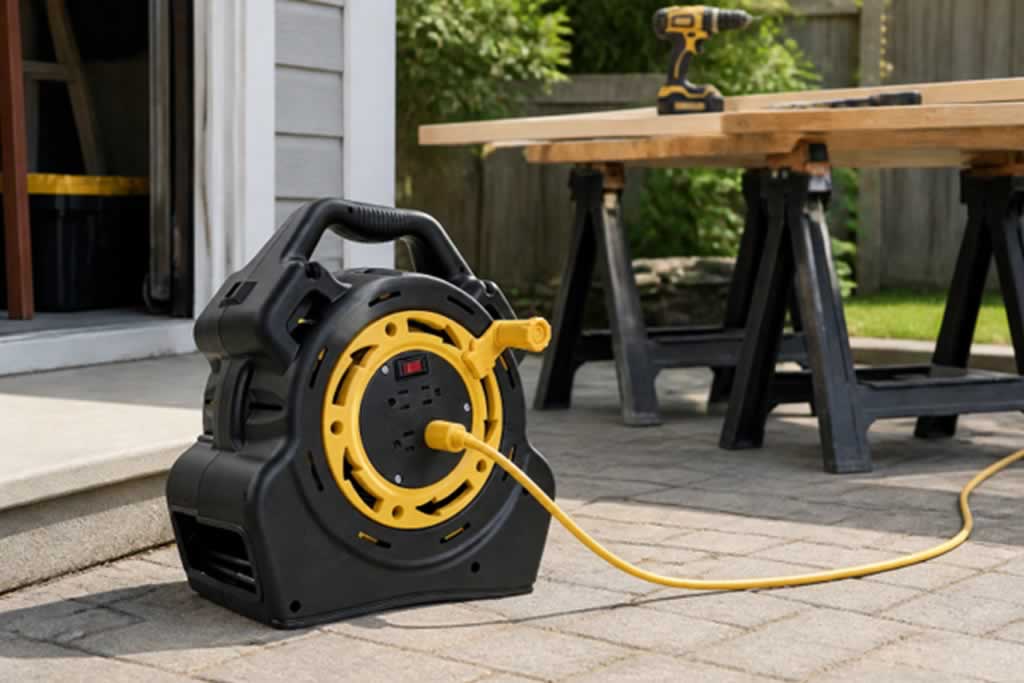
An outdoor extension cord reel from LinkVolt provides a structured way to manage the cable, but the reel should still be treated as electrical equipment rather than simple storage. Position it where the housing remains stable, ventilated, visible and protected from vehicle traffic.
Match the cord and reel to the tool
Every connected tool draws current. The reel, cord, plug, outlet and any other accessory in the path must be suitable for that load. Check the tool nameplate and the cord-reel instructions instead of estimating from the tool’s size.
When several devices share a reel, their loads must be considered together. The presence of multiple outlets does not mean every outlet can be used at maximum demand simultaneously. If a breaker trips, a plug feels hot or the cable develops an unusual odor, stop and investigate rather than repeatedly resetting the circuit.
Route the cable around the work, not through it
The safest route is usually along the edge of the project area, away from doors, sharp edges, ladders and the path used to carry materials. Avoid placing the cable where a saw, mower or other cutting tool can reach it.
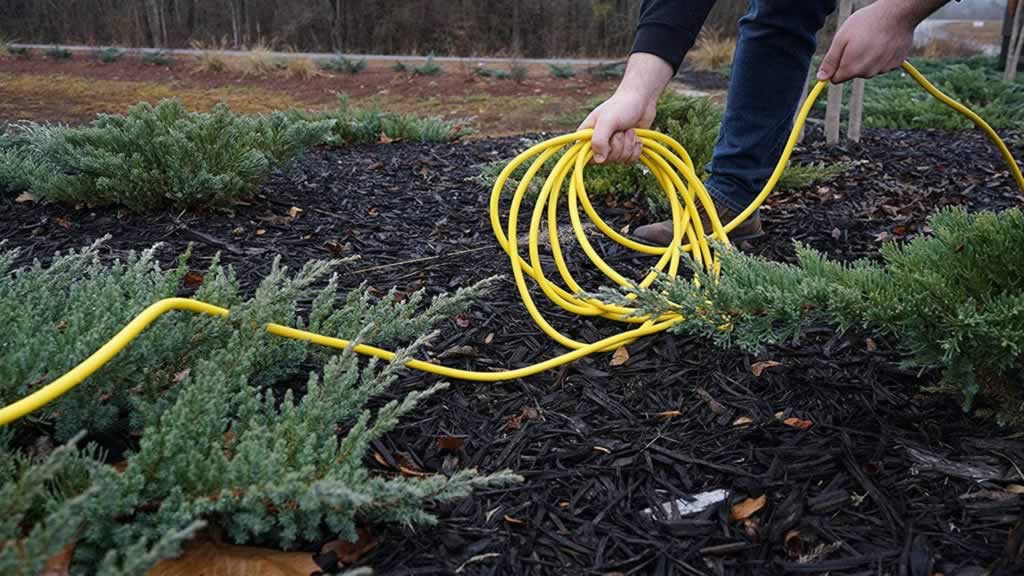
Do not create a tight tripwire across a walkway. If crossing a route cannot be avoided, use a suitable cable protector and make the crossing obvious. Never hide an energized extension cord under a rug or bury it where heat and damage cannot be seen.
Keep connections dry and supported
Outdoor-rated does not mean waterproof in every condition. Keep plug connections out of standing water, protect them from rain as directed by the manufacturer and use a properly protected outdoor receptacle. Ground-fault protection is an important layer for outdoor electrical work; local electrical requirements and manufacturer instructions should guide the setup.
Connections should rest without tension. A hanging joint can pull partially apart, allowing moisture or debris into the connection and increasing wear on the blades and conductors.
Use the reel as a system, not a handle for live cable
Place the reel before connecting the load whenever possible. Do not drag it by the cable or move it in a way that strains energized connections. Keep the winding handle clear while the cord is in use and make sure the reel cannot roll or tip into the work area.
When the task is complete, switch off the tool, disconnect it and then unplug the reel from the supply. Allow any warmth to dissipate before winding. Guide the cable back evenly rather than forcing overlapping loops onto one side of the drum.
Storage determines how long a cord remains reliable
Wipe away dry dirt and check the cable as it is rewound. Store the reel in a dry place away from direct sunlight, chemicals, sharp objects and extreme heat. Avoid stacking heavy items on the cable or housing.
The next project should begin with an inspection, not with the assumption that the reel was fine last time. Damage can occur during storage, transport or cleanup.
A tidy cable is only part of a safe setup
Cord reels are valuable because they bring order to temporary power. The real safety benefit comes from the habits around them: choosing the right equipment, unwinding appropriately, respecting the total load, protecting connections and routing the cable deliberately.
Take a minute to plan those details before the tool starts. The project will be easier to move around, faster to clean up and less likely to be interrupted by a power problem.