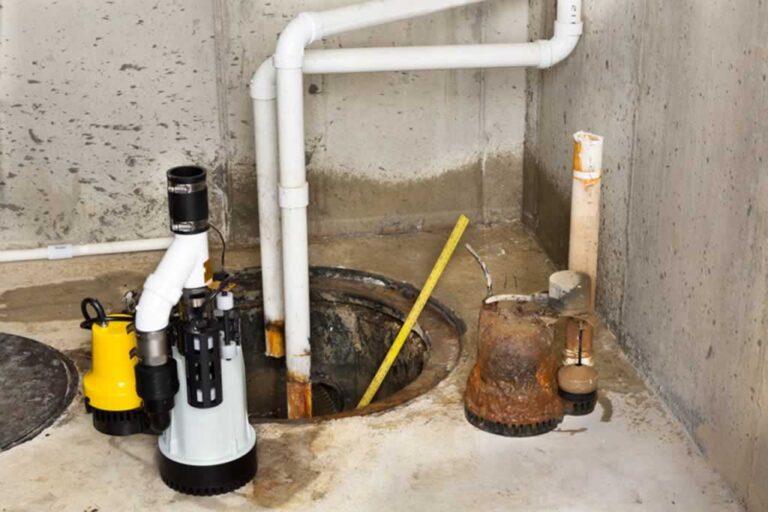

A sump pump is one of the cheapest forms of flood insurance a house can have. If yours is more than 7 to 10 years old, or your basement doesn’t have one at all, here’s how the job works, which parts a handy homeowner can do, and what you’d pay a pro to handle it.
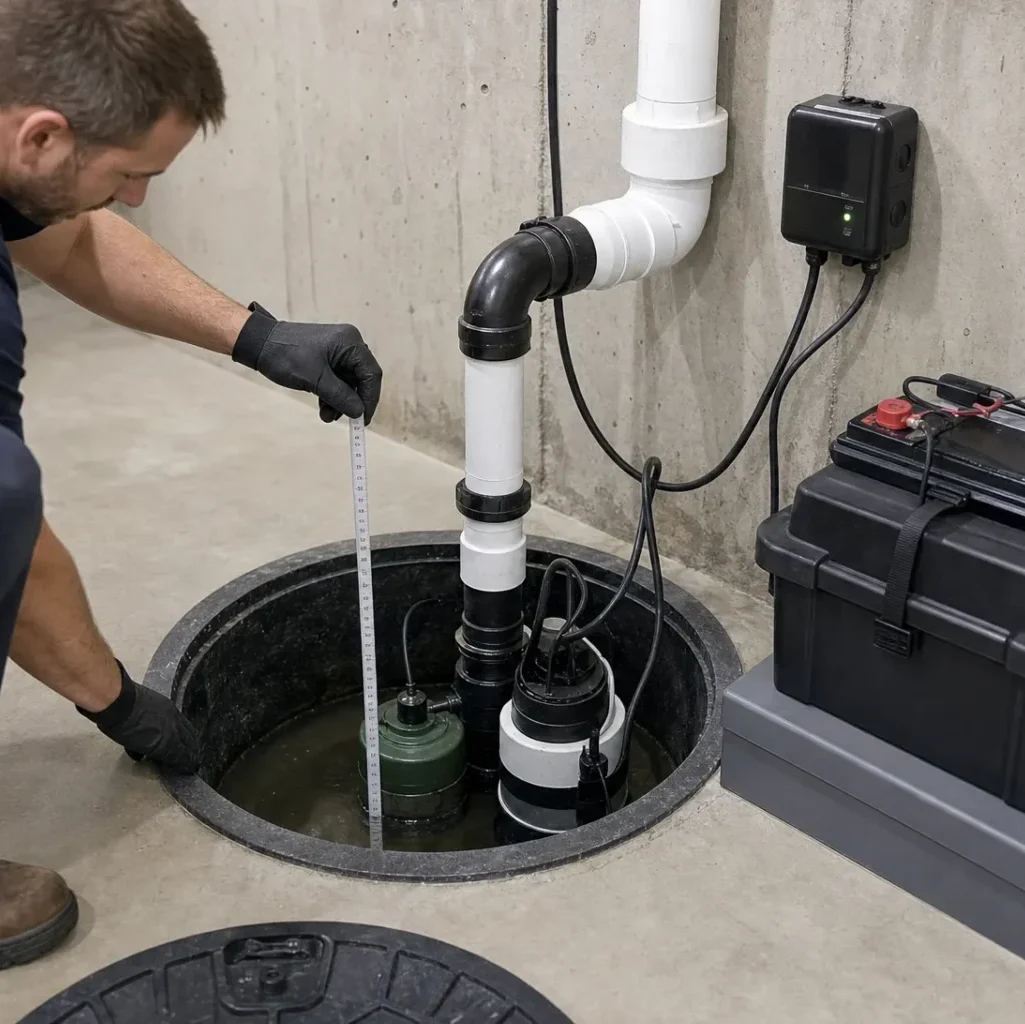
First, which job are you doing?
There are really two different projects:
- Replacing a pump in an existing pit. The basin and discharge line are already there. This is a couple of hours of work and one of the easier plumbing jobs in a house.
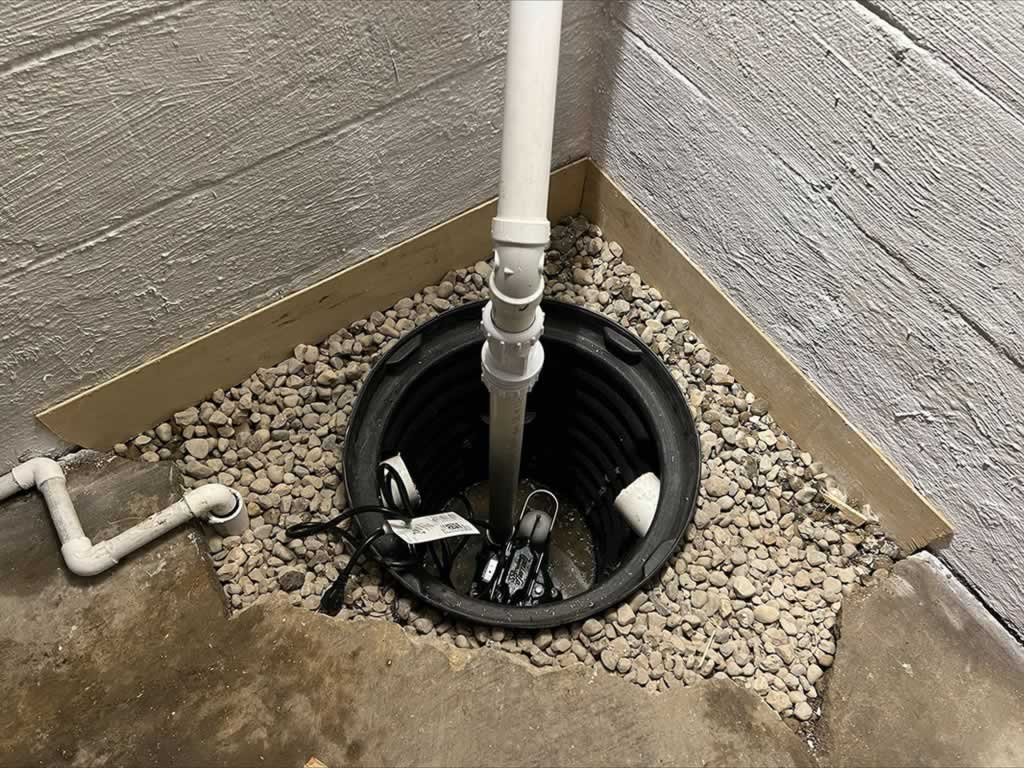
- A new installation. You’re breaking up the slab, digging a pit, setting a basin and running a discharge line through the foundation. It’s a one- to two-day job and much harder.
Choosing the right pump
Submersible vs. pedestal. Submersible pumps sit underwater in the pit. They’re quieter, more powerful and the standard choice for most basements. Pedestal pumps keep the motor on a column above the pit. They’re cheaper and easy to service but louder, and they suit small or narrow pits.
Horsepower. A 1/2 HP pump is right for most basements, handling the typical 7 to 10 feet of vertical lift. Choose 1/3 HP for a shallow basement where the pump rarely runs, and 3/4 HP if you have a high water table or more than 10 to 12 feet of lift. Bigger isn’t automatically better; an oversized pump short-cycles and wears out faster.
Switch type. A vertical float switch works well in narrow pits and is less likely to snag on the pit wall than a tethered float.
What you’ll need
For a replacement:
- New pump
- Check valve
- PVC primer and cement, or a rubber coupling with hose clamps
- Short length of 1-1/2” PVC pipe (most residential pumps)
- Hacksaw or PVC cutter, screwdriver, tape measure
- Bucket, sponge and rubber gloves
For a new installation, add:
- Plastic sump basin with lid (typically 18” to 24” across)
- Rented jackhammer or concrete saw
- Shovel, gravel and bagged concrete
- Hammer drill with a core bit or masonry bit for the wall penetration
- Discharge pipe and fittings to run outside, plus exterior sealant
How to replace a sump pump
- Unplug the old pump and let it drain. Never work in a pit with the pump plugged in.
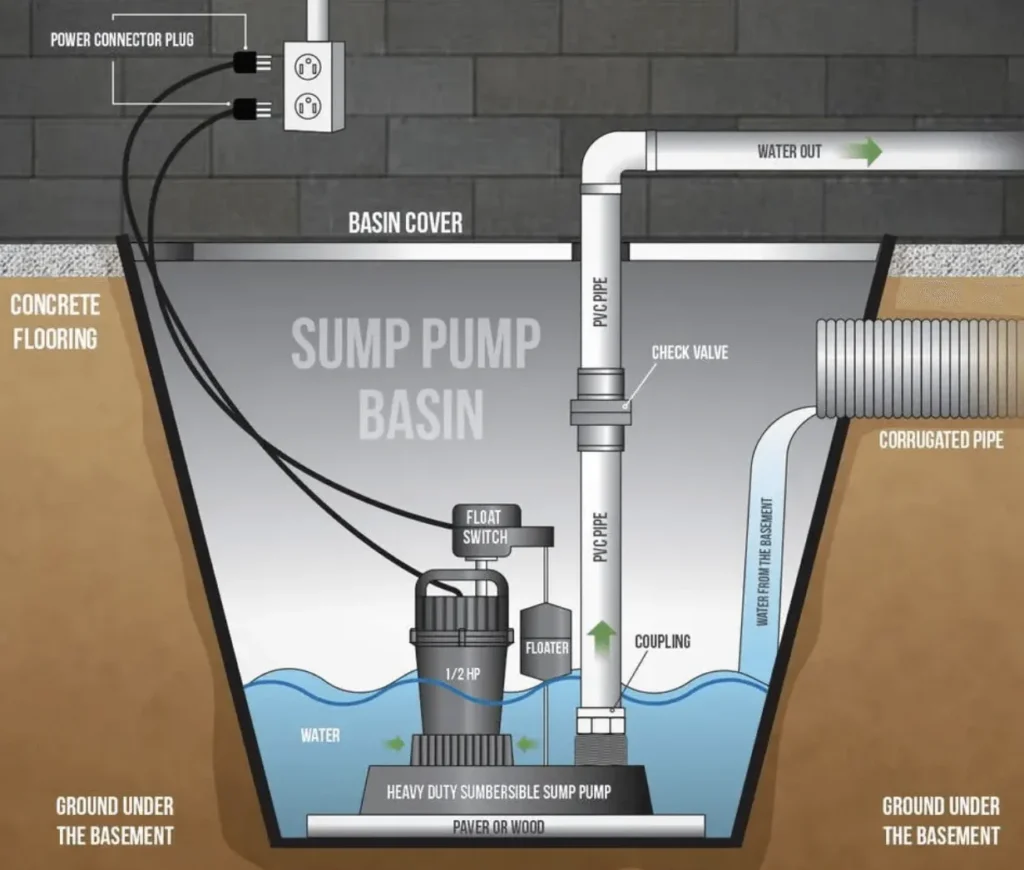
- Disconnect the discharge pipe. Most installations have a rubber union or coupling above the check valve. Loosen the clamps or cut the pipe a few inches above the pump.
- Lift out the old pump and clean the pit. Scoop out silt, gravel and debris so the new pump sits level on a solid base.
- Dry-fit the new pump. Thread a PVC adapter into the pump outlet, then add pipe up to the existing line. Make sure the float can move freely without touching the pit wall.
- Install a new check valve. It keeps water in the pipe from flowing back into the pit each time the pump shuts off. Watch the flow arrow. Drill a small 1/8” weep hole in the pipe just above the pump outlet, below the check valve, to prevent air lock.
- Glue or clamp the connections and let PVC cement set according to the label.
- Plug the pump into a GFCI outlet close to the pit. Avoid extension cords.
- Test it. Pour a bucket or two of water into the pit and watch the pump start, empty the pit and shut off cleanly.
How a new installation works
- Pick the spot. Put the pit at the lowest point of the basement, ideally where it can collect water from interior drain tile, and near an exterior wall for a short discharge run.
- Call 811 to locate buried utilities, and check whether your town requires a permit.
- Cut and remove the slab. Mark a circle a few inches wider than the basin and break it out with a jackhammer.
- Dig the hole a few inches deeper than the basin. Add a layer of gravel at the bottom.
- Set the basin so the rim sits flush with the floor, backfill around it with gravel, and patch the floor with concrete.
- Drill through the rim joist or foundation for the discharge line, then run the pipe out and seal the penetration on both sides.
- Route the water away. Discharge at least 10 to 20 feet from the foundation, downhill and away from neighbors. Many towns prohibit pumping into the sanitary sewer. In cold climates, add a freeze-guard fitting outside.
- Install the pump, check valve and outlet, then test it the same way as above.
What a pro would charge
At average U.S. prices for a 1/2 HP submersible pump:
| Job | Hired out | DIY |
| Replace an existing pump | About $660 | About $310 |
| Add a battery backup pump | About $850 | About $500 |
| New installation (20 ft discharge line) | About $2,630 | About $890 |
Replacement is where DIY makes the most sense. You save a few hundred dollars and the risk is low. For a new pit, the savings are bigger, but so is the work: breaking concrete, digging below the slab and drilling the foundation. Most homeowners hire that part out.
Your own number depends on pump size, discharge length, electrical work, backup options and local labor rates. You can run your own numbers with this sump pump installation cost calculator, which also compares DIY and pro pricing.
Add a backup if your basement is finished
The storms that fill a sump pit often knock out power too. If you have a finished basement or anything valuable down there, consider:
- Battery backup pump. A second pump in the same pit that runs off a deep-cycle battery. Replace the battery every 3 to 5 years.
- Water-powered backup. Uses city water pressure, so it never needs a battery. It won’t work on a private well.
- High-water alarm. Inexpensive, and Wi-Fi versions text you when the pit is about to overflow.
Keep it running
Test your pump every few months by pouring water into the pit. Clean the pit and the intake screen once a year, and plan on replacing the pump every 7 to 10 years. A few minutes of maintenance is a lot cheaper than drying out a flooded basement.
This article is provide by Jason Keeley who is the founder of Basement Calculator, which he started in 2014 while finishing his own basement. He has been tackling DIY home renovation projects for more than 25 years.