The remodel is finished. The new patio is level, the addition looks as though it has always belonged there, and the tire tracks from the contractor’s equipment have finally disappeared from the lawn. Then you notice the tree.
Maybe its canopy looks thinner than it did last summer. Leaves are smaller. A few branches at the tips have died back. One side seems less vigorous than the other. Nothing dramatic happened to the trunk during construction, and no one remembers cutting a major branch.
So what changed? Possibly quite a lot. Construction damage to trees is not limited to a backhoe striking a trunk or a contractor accidentally breaking a limb. Some of the most important changes happen where homeowners cannot readily see them: in the soil and root zone.
University of Illinois Extension identifies soil compaction, severed roots, grade and drainage changes, and altered soil moisture among the ways construction can injure trees. It also warns that symptoms from compaction or root suffocation may not appear for months or years.
That delay is one reason a tree can seem perfectly fine during a remodel and start looking stressed long after the contractor has packed up.
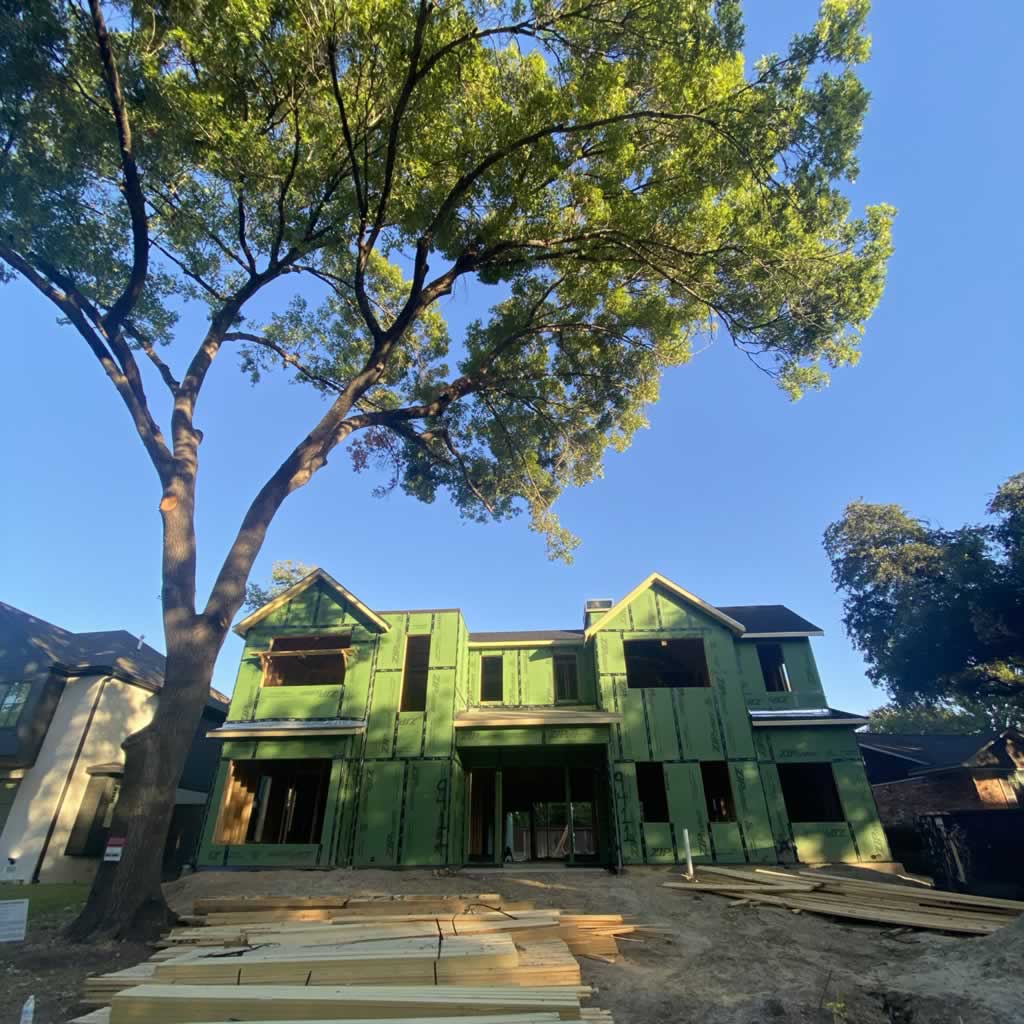
A Tree Can Be Damaged Without Anyone Touching the Trunk
Homeowners naturally judge a tree by what is visible above ground. If the bark is intact and the branches were not broken, the assumption is often that the tree made it through construction untouched. But the trunk is only one part of a much larger living system.
Most of the Important Activity Is Happening Underground
Roots anchor a tree, absorb water and nutrients, and depend on soil conditions that allow oxygen and water to move through the ground.
Many tree roots are relatively shallow. Illinois Extension reports that roots are concentrated within approximately the upper 6 to 18 inches of soil. Those roots can therefore occupy exactly the part of the yard affected by excavation, equipment traffic, material storage, new pavement, and changes in grade.
A contractor does not need to dig directly beside the trunk to interfere with that system. Imagine a mature shade tree standing 15 feet from a planned patio. The trunk never enters the work zone, but a skid steer repeatedly crosses the yard between the driveway and patio.
Pallets of stone sit beneath the canopy for several weeks. A trench is cut nearby for lighting. From the house, the tree may look untouched. Below ground, the situation can be very different.
Why the Drip Line Is Not a Perfect Boundary
Another common misconception is that roots end where the branches end. They do not. Tree roots can extend well beyond the edge of the canopy, meaning a project outside the visible “footprint” of a tree may still overlap its root system.
Illinois Extension recommends protecting the largest root zone possible during construction rather than treating the canopy edge as the limit. That matters when laying out driveways, patios, retaining walls, sheds, additions, utility trenches, fences, and drainage systems. A few feet on a project drawing can make a meaningful difference underground.
Think Back to What Happened During the Project
When a tree begins declining after a remodel, looking backward can sometimes provide better clues than looking at the tree alone. Instead of asking only, “What is wrong with the leaves?” ask, “What changed around this tree?”
Where Did the Trucks and Equipment Travel?
Construction equipment puts far more pressure on soil than ordinary foot traffic. Repeated passes over the same route can compress soil particles and reduce pore space—the tiny spaces that normally allow air and water to move through the soil.
The U.S. Department of Agriculture Forest Service explains that heavy equipment can compact soil, reducing pore space and restricting the movement of air, water, and roots. The lawn may recover visually afterward. Fresh grass seed can hide tire tracks surprisingly well.
That does not necessarily mean the soil beneath it returned to its previous condition. Think about where workers parked, where machines turned around, and which routes they repeatedly used between the street and construction area.
Those paths may matter months later.
Where Were Materials and Debris Stored?
Not every construction impact involves machinery. Stacks of lumber, pallets of pavers, dumpsters, soil piles, gravel, and other heavy materials can also place pressure on the root zone.
The area beneath a broad shade tree often looks like convenient unused space on a busy job site. Unfortunately, it may also contain an important portion of the tree’s root system. Even temporary use can become significant when the same area is repeatedly driven over or loaded throughout a long project.
Was Anything Trenched, Dug, or Regraded?
Home improvements often involve more excavation than homeowners remember once the finished surface is in place.
Consider whether the project included:
- electrical lines;
- irrigation;
- drainage pipe;
- gas or water utilities;
- fence posts;
- foundation work;
- retaining walls;
- landscape edging;
- new walkways; or
- grading to redirect runoff.
A narrow trench may not look substantial from above, but its impact depends on where it intersects the root system and which roots are affected. Adding soil can create problems as well. Illinois Extension warns that significant grade changes can expose roots, while added fill can smother roots and alter normal root-zone conditions.
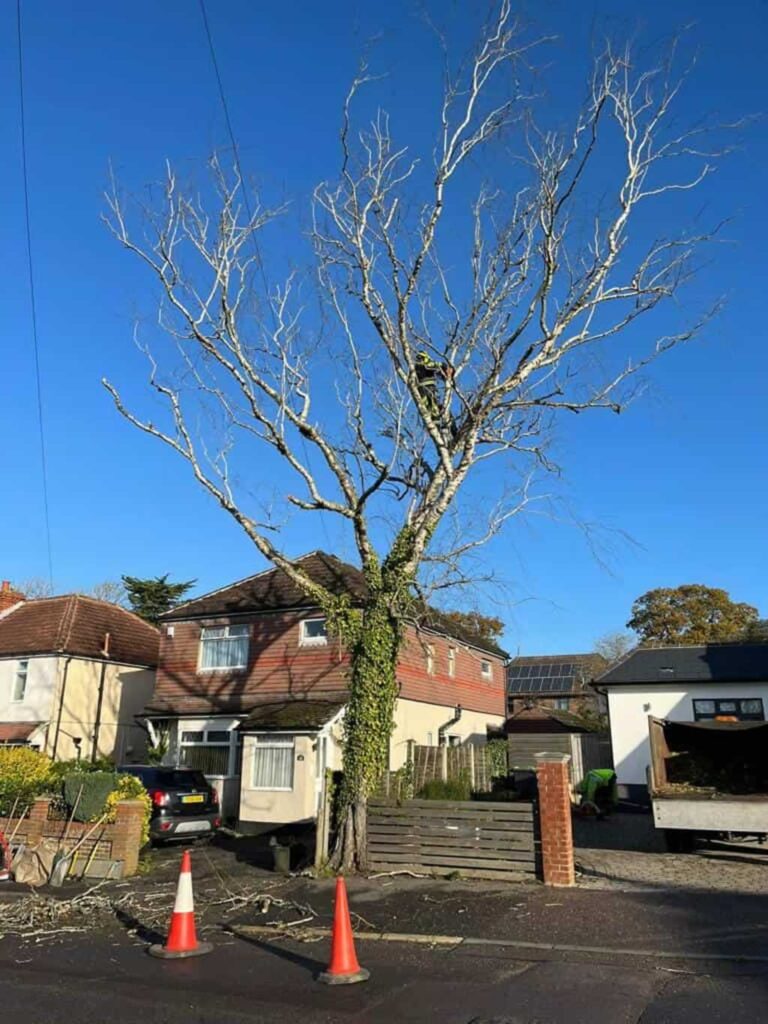
The New Driveway or Patio Changed More Than the View
Hardscape projects deserve particular attention because they often transform both the surface and what happens beneath it.
Hardscape Can Replace Open Rooting Space
Before construction, an area may have consisted of lawn, mulch, or garden soil through which water and air could move relatively freely. After construction, part of that area may be covered by concrete, compacted base material, pavers, or another surface designed specifically not to move. That is excellent for supporting vehicles and patio furniture. It is not the same environment that existed around tree roots beforehand.
Excavation Can Remove Roots Before Concrete Is Poured
A finished driveway gives few clues about the excavation that happened first. Installing hardscape commonly requires removing soil and creating a stable base. If that work overlaps significant portions of a mature tree’s root zone, roots may be cut or surrounding soil conditions altered.
The important question is therefore not simply how close the finished pavement is to the trunk. It is what happened during installation.
New Surfaces Can Change How Water Moves Through the Yard
Renovations can also change drainage. A new roof section increases the area collecting rainfall. Downspouts may discharge somewhere new. Patios and walks can redirect runoff. Grading can send water toward or away from parts of the yard.
Depending on the property, the result could be a root zone that stays wetter than before or one that receives less moisture.
Because several factors can produce similar symptoms in trees, changes in drainage are worth investigating rather than assuming every declining canopy needs fertilizer or more irrigation.
Soil Compaction Is Easy to Miss
Compaction is easy to overlook because there may be no broken branch or exposed root to photograph. The ground may simply feel firm.
Heavy Equipment Can Compress the Ground Quickly
Healthy soil contains solid material and pore spaces that allow water, air, and roots to move through it. Heavy equipment can compress that structure quickly.
Penn State Extension explains that construction-damaged soils may be heavily compacted and irregularly layered, with drainage and other physical conditions changing over short distances.
A restored lawn therefore is not proof that the soil beneath it has returned to its previous condition.
Compacted Soil Changes Air and Water Movement
Tree roots need soil conditions that support normal root function, not simply fertilizer. The International Society of Arboriculture explains that compaction and grade changes can reduce soil oxygen and limit water movement within a tree’s root zone.
A tree dealing with damaged roots or altered soil conditions may then be less able to handle additional stresses, such as dry weather.
Why Adding More Topsoil Is Not Necessarily the Fix
When a plant looks unhealthy, adding better soil can feel intuitive. Around an established tree, however, spreading a thick layer of soil over the existing grade changes the root environment again. The correct response depends on what actually happened underground.
In appropriate situations, arboricultural professionals may use soil aeration or air excavation to investigate or address compacted root zones. Penn State Extension describes air-spade applications as a way to fracture or remove compacted soil while working around existing trees.
That does not mean every stressed tree needs air spading—or that a homeowner should excavate around roots without knowing what is there.
It means compaction is worth evaluating before assuming the answer comes in a bag of fertilizer.
The Warning Signs May Show Up Long After the Contractor Leaves
Construction-related tree problems can be confusing because root and soil injuries may operate on a much slower timeline than a broken branch. Illinois Extension warns that symptoms associated with root suffocation or compaction may take months or years to appear.
So the useful question is not only, “What happened to the tree this week?” It may also be, “What happened in this yard two years ago?”
A Canopy That Is Becoming Noticeably Thinner
Stand where you have a clear view of the whole tree rather than inspecting one branch at a time. Does the canopy seem thinner than neighboring trees of the same species? Can you see considerably more sky through it than in previous years?
Canopy thinning is not specific to construction damage, but it is a change worth documenting. Old photographs of the property can be surprisingly useful for comparison.
Smaller Leaves or Early Leaf Drop
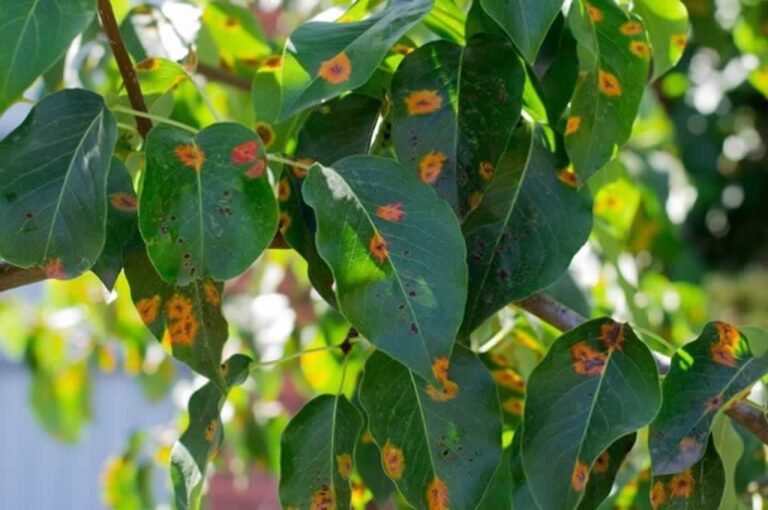
Changes in leaf size, premature fall color, wilting, or early leaf drop can accompany tree stress. These signs can have many causes, however, which is why context matters. A homeowner should resist jumping from one symptom to a diagnosis.
Instead, notice patterns.
When did the change begin? Is the entire canopy affected? Did it start after an unusually dry season? Was construction recently completed nearby?
Dead Tips and Increasing Branch Dieback
A handful of dead twigs does not automatically indicate a major problem. Increasing dieback across larger portions of the canopy deserves more attention, particularly when it appears alongside other changes.
International Society of Arboriculture guidance identifies smaller or fewer leaves, crown dieback, and premature fall color among signs of decline after construction and recommends professional assessment when tree health or structural integrity is a concern.
Changes Near the Construction Side of the Tree
Sometimes the history of the site provides a useful clue. Suppose excavation occurred primarily on one side of the tree and the canopy later shows greater decline on that side. That pattern may be worth mentioning during an arborist’s assessment.
It does not prove cause and effect by itself, but details about exactly where construction occurred can help a professional interpret what they see.
Do Not Assume Every Post-Remodel Problem Means the Tree Must Come Down
A struggling tree and a dangerous tree are not necessarily the same thing.
Some Trees May Be Stressed Rather Than Structurally Unsafe
A tree can show physiological stress while remaining structurally stable. Conversely, a tree with a full canopy can still have structural defects that deserve attention. Homeowners who want professional tree-care help can visit website to learn more about available services before deciding what to do next. This is one reason appearance alone should not determine whether a mature tree stays or goes.
The International Society of Arboriculture advises professional assessment of construction-damaged trees for viability, risk, and appropriate treatment options.
Soil and Root Problems May Have Different Solutions
If the underlying problem involves soil conditions, drainage, root injury, or compaction, indiscriminate pruning may not address it. Likewise, fertilization is not a universal response to tree stress.
The appropriate next step may range from observation and improved watering practices to soil investigation, root-zone work, pruning, or, when damage and risk justify it, removal. What matters is matching the response to the problem rather than treating every declining tree the same way.
Why the Cause Matters Before Choosing a Response
Tree symptoms overlap. Thin foliage can be associated with root damage, drought, pests, diseases, soil problems, or multiple stresses at once. A remodeling project may be relevant without being the only factor involved, so diagnosis should come before treatment.
If the tree has developed a significant new lean, large hanging branches, visible cracking, substantial root movement, or another condition that could create an immediate hazard, keep people away from the affected area and obtain professional help promptly rather than attempting a DIY inspection or removal.
Information to Gather Before an Arborist Visit
If you call an arborist after a remodel, the history of the project can be as useful as the symptoms you see today. Bring or describe:
- when construction started and ended, and when you first noticed changes in the tree;
- where heavy equipment, contractor parking, dumpsters, and material storage were located;
- where trenches, footings, retaining walls, patios, driveways, or utility lines were installed;
- whether soil was added, removed, or regraded around the tree;
- whether downspouts, drains, irrigation, or runoff patterns changed; and
- any before-and-after photos, site plans, permits, or construction photos that show the area around the tree.
Those details do not prove that construction caused the decline, but they can help an arborist compare the timing and location of site disturbance with the tree’s current condition.
What an Arborist Looks at That a Homeowner May Not See
Homeowners can provide valuable site history; an arborist adds another layer by interpreting that history in the context of the tree, soil, site, and structure.
Root Flare and Soil Conditions
Where the trunk meets the ground can reveal useful information about grade changes and root-zone conditions. An assessment may also consider whether soil has been added or removed, whether the area is compacted, and how surface conditions have changed.
Changes in Drainage or Grade
A finished landscape can disguise substantial site changes. Knowing that one area was raised six inches, a drain was installed, or a slope was altered may help explain why conditions around the tree differ from those before construction.
Root Damage and Compaction
Root damage cannot always be assessed by simply digging around the trunk. In certain cases, specialized tools and techniques can allow professionals to examine root-zone conditions while reducing unnecessary mechanical damage.
The objective is not to expose every root. It is to gather enough information to understand what changed and whether useful corrective options remain.
Canopy Response and Structural Condition
A competent assessment is broader than “the leaves look bad.” It considers the whole tree. Species, age, existing defects, canopy condition, soil, construction history, root-zone changes, site use, and potential targets beneath the tree can all influence recommendations.
That context is particularly important when deciding whether preservation is realistic or whether structural concerns outweigh the value of keeping the tree.
Planning the Next Home Project Around Existing Trees
The best time to address construction damage is before it happens. A tree-protection plan does not need to turn an ordinary remodel into an environmental engineering project. It does require contractors and homeowners to agree that mature trees are part of the site—not obstacles to work around at the last minute.
Mark the Tree Protection Area Before Work Begins
Protective fencing provides a visible boundary. Illinois Extension recommends establishing tree protection zones and keeping heavy machinery and construction traffic out of them to reduce compaction and root damage. A protection zone should not become temporary parking simply because the project falls behind schedule.
Plan Equipment Routes and Material Storage Early
Before the first machine arrives, identify:
- equipment access routes;
- contractor parking;
- soil stockpile locations;
- dumpster placement;
- material storage;
- concrete washout or work areas; and
- trees that need protection.
These decisions are easier to make on paper than after the property is crowded with workers and materials.
Discuss Trenching and Utilities Before Excavation Starts
Utility routes sometimes have flexibility. Illinois Extension notes that tunneling utilities beneath roots may reduce root disturbance compared with conventional trenching.
Whether that is practical depends on the site, utility, tree, and project, but the discussion needs to happen before excavation—not after major roots have already been cut.
Consider Mature Trees Before Finalizing the Project
Sometimes the most effective tree-protection decision is a design decision.
Could the patio shift slightly?
Could the walkway curve?
Could storage move to the other side of the property?
Could a utility follow another route?
None of those choices is automatically necessary. But asking the questions during planning creates options that may disappear once construction begins.
The Cheapest Time to Protect a Mature Tree Is Before Construction Starts
Home-improvement planning usually focuses on the house, but mature trees deserve a place in that conversation. The cost of protecting a root zone during construction may be modest compared with discovering years later that a large established tree is in serious decline.
Protection also preserves choices. Before construction, a contractor can reroute traffic or move materials, a designer may be able to adjust a hardscape edge, and an arborist can identify sensitive areas.
After roots have been severed or soil heavily compacted, the available responses may be narrower. That is why tree protection works best as part of project planning rather than post-project cleanup.
The House Can Look Better Without the Landscape Paying the Price
A successful remodel should leave the property better than it found it. That means looking beyond what changed inside the walls. When a mature tree starts struggling after construction, the explanation may have nothing to do with an obvious wound on the trunk.
The clues may be buried beneath a new patio, hidden under restored grass, or tied to a drainage pattern that changed when the project was completed. Start with the history of the site.
Remember where the machines traveled, where materials sat, where trenches were dug, and how the grade changed. Watch for meaningful changes in canopy density, leaf behavior, or branch dieback, but avoid diagnosing a complicated tree problem from a single symptom.
And for the next project, make the tree part of the plan before the first machine enters the yard. Contractors may never touch the trunk. Protecting everything around it is what can make the difference.