
When you make purchases for your home, you want to consider your lifestyle and budget. The same can be said about outdoor furniture, but you also need to ensure it can withstand the elements.

Things to Bear in Mind
- Maintain cohesiveness between your interior and external design style. Furnishing your outdoor spaces should be based on comfort while acting as an extension of the home.
- Always keep your budget in mind when shopping, but factor in some flexibility. High-quality pieces are often expensive but last longer than the less expensive furniture. Consider cutting costs in accessorizing with less money and purchase the large items that give you the most life.
- When shopping, keep the final purpose in mind. If you are planning to use it as a space for guests, make sure everyone is accommodated. This includes extra umbrellas or stowaway seating.
- Purchase items that are easy to clean, including quick-dry cushions for seating. Polyurethane foam does not absorb water like fabric, preventing mildew.
- Plan to store or cover seasonal furniture.
- Consider the material of the items you select. Most outdoor pieces are constructed of wood, metal, or synthetic fibers. They are designed to weather the elements and are easy to clean. Some materials are heavy and durable, while others are lightweight and designed to be stored in poor weather.
Material Types Available
Wood
Teak is a popular choice for outdoor furniture because it is low maintenance. When treated with a weatherproof stain, pieces can last decades. Teak originally was used in boat building. Therefore, you can trust in its resiliency. Teak begins as a brown color but turns to a light grey as it ages in the sun. There is nothing wrong with the furniture if you see these changes. Damages only occur if you fail to reapply a protectant every year. Cleaning requires wiping down with a disinfectant, as you would indoor tables. When planning to purchase, ensure every piece has the stamp of the Forest Stewardship Council. They are in charge of responsible harvesting. Finally, all furniture should be constructed with stainless-steel screws, not staples or glue.
Other popular wood type choices include:
- Eucalyptus – needs treated three to four times a year.
- Cedar – shortest life-expectancy of wood types
- Oak
- Mahogany

Metal
Metal is a popular material for outdoor furniture because they are cheaper to construct. Common types include:
- Aluminum – Benefits include low-cost, lightweight, and rustproof; however, it will oxidize.
- Wrought Iron – Popular because it looks elegant, but it is more expensive and heavier. Rusting may happen but can be prevented with a protectant.
- Stainless Steel – Steel is durable and easy to care for. If glass is used in the design, it should be tempered.
Synthetic
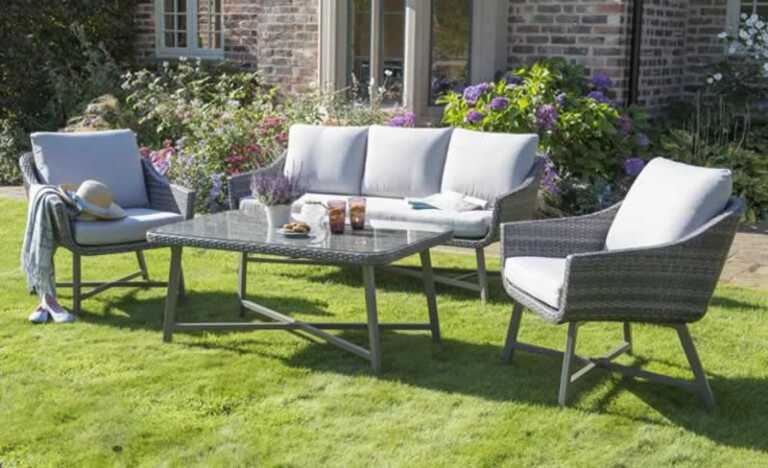
A material selection for outdoor furniture that is inexpensive is plastic. Synthetic fibers found in rattan and wicker pieces offer weather-resistant seating. It is often not as comfortable as other materials but accessorized with cushions makes you forget that disadvantage. When you are ready to check out rattan furniture, make sure the weave is so tight you cannot see through. Cleaning plastic requires soapy water and a rag or a gentle rinse with the hose. Rattan constructed from natural fibers should be sheltered from direct sunlight and moisture, so plan to store it or purchase covers.