Are you planning to do your own plumbing at home? You can save hundreds of dollars by learning how to fix overflowing toilets and dripping faucets yourself. Here are some useful tips that will help you to handle the next plumbing issue that you face with some expertise:
Check the Showerhead
Although professionals provide a variety of plumbing services, you can fix your own showerhead quite easily with thread tape. If your showerhead is leaking, chances are that the threads are not connecting tightly, resulting in leakage. All you have to do is unscrew the showerhead and apply new thread tape in a clockwise direction then reattach the head. If your showerhead has some blockage, you should let it sit in vinegar and warm water for an hour. You can also use a tiny brush to loosen up the mineral deposits that might be clogging the spray.
Loosen Tough Pipe Fittings with Heat
If you cannot get that trap underneath the sink loose with a pipe wrench, then brute strength is not the best way to approach this problem. Hardened fittings might refuse to budge no matter how strong you are.

You should consider using heat to loosen up a tough fitting that seems to have solidified. Just use a propane torch to apply heat for a few minutes before trying to open the pipe fitting. To keep the surrounding walls safe, you should consider using heat-resistant material. Do not apply heat to non-metal pipes and keep the propane torch away from gas pipes.
Replace Parts in Your Faucet and Toilet
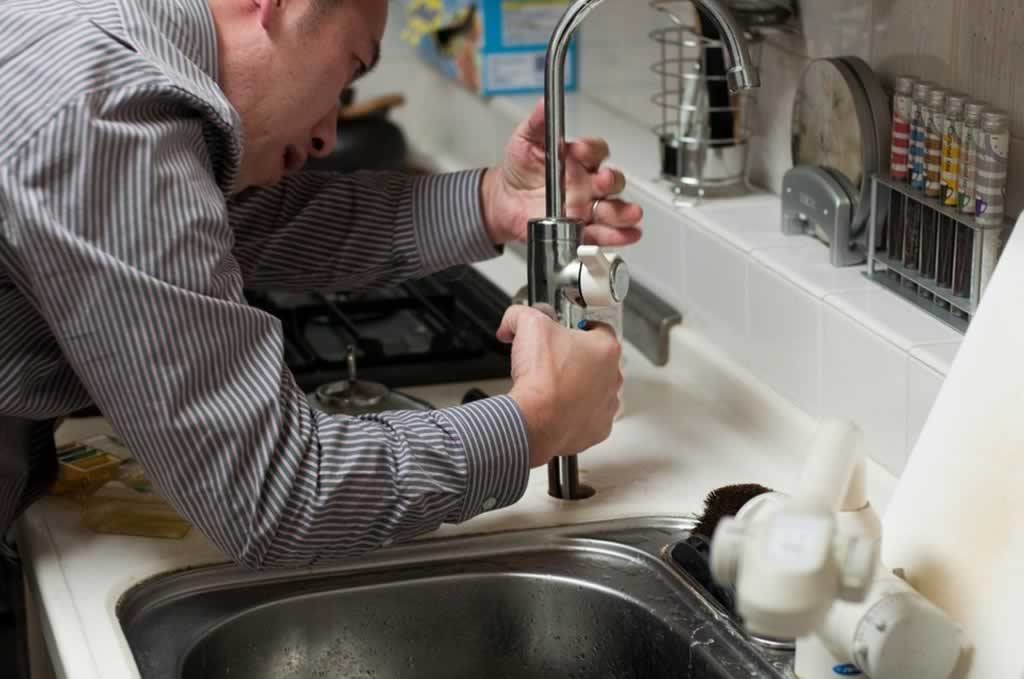
Taking your faucet or toilet apart can be messy if you do not know what you are doing. However, you cannot do much damage by trying to replace the faucet cartridge or toilet flapper. If there is a leakage between your toilet bowl and tank, you might need to replace the flapper. The part costs just a few dollars and comes with easy-to-follow instructions, which makes it easy to replace. You can repair your leaking faucet by replacing the cartridge. You just have to remove one or two screws before you get to the cartridge. If you hear the sink dripping or toilet running, you should try to replace these parts yourself.
Make Your Water Heater Efficient
You need to ensure that your water heater’s thermostat is set at the right temperature. Make sure that you also insulate the water heater tank to ensure that the water stays hotter for longer. You can install some cheap insulating blankets yourself. If your water comes from a well, sediment will collect in the lines much faster. You can get rid of this sediment by draining water from your tank once in three months. Start by turning off the heater then let the water flow into a bucket. Doing so will get rid of the sediment at the bottom of the tank thus making your water heater more efficient.
Use Thread Tape
Instead of using thread-sealing compound, which tends to smear and drip, you should consider using thread tape. It works better for most projects that require pipe threads. Make sure that you purchase a multi-purpose tape but if you want easy-to-handle tape, you should purchase thick tape. When wrapping the tape, you should do so in a counterclockwise direction to cover the threads. If you cannot get the tape inside a small space, you should roll some of it around a pen.
Conclusion
The above tips will come in handy for beginners who have never tried plumbing before. Just make sure that you experiment with the easier jobs first to avoid problems.