
What are trommel brushes?
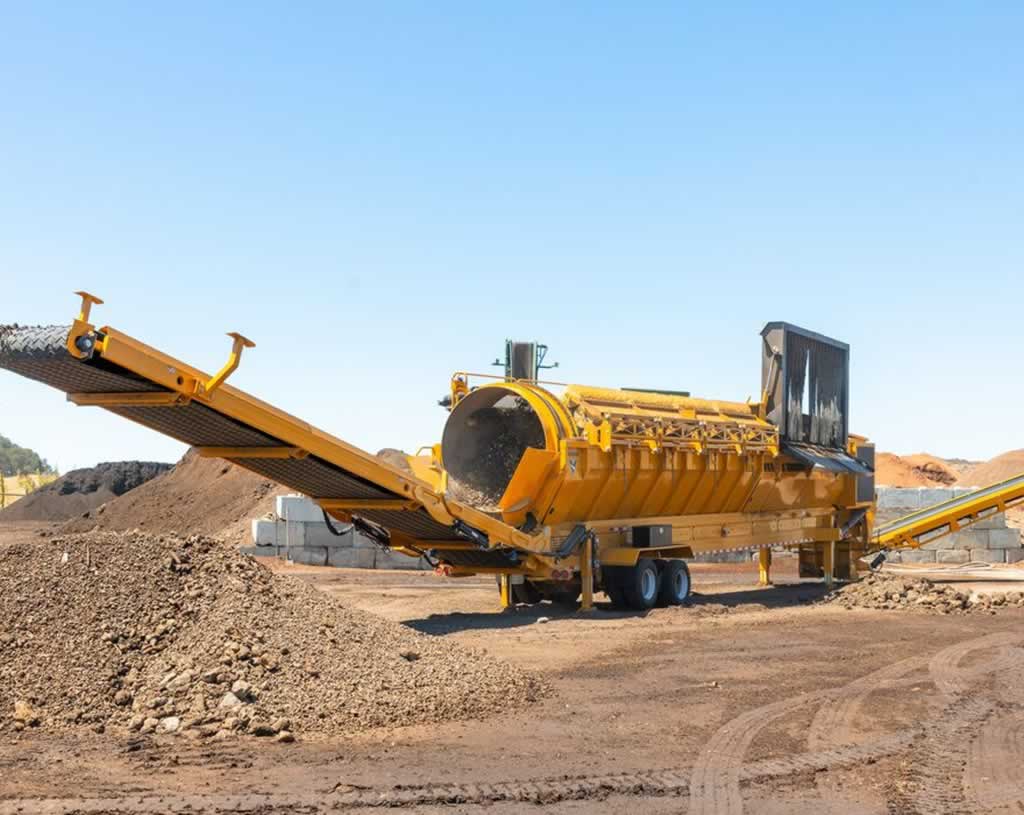
Used in a variety of industries, a trommel brush is a cleaning attachment designed to be combined with a trommel screen. Trommel screens separate materials, comprising a rotating cylindrical drum with varying-size mesh holes and a trommel brush mounted on the side of the screen to remove excess debris, clay and any sticky or wet material. As the drum rotates, unfiltered material is fed into one end, and by using gravity and a tumbling action, the screen filters particles by size as the smaller pieces fall through the holes and mesh, leaving only larger material to exit the other side.
Industrial trommel brush use
Mainly found in the construction, mining, and waste management sectors, trommel screens are large, heavy-duty machines that can handle sifting through a wide range of materials. Depending on the industry and application, the process can be a messy one, so the screens are used in tandem with trommel brushes to ensure that any waste product is removed, and the screen remains clear for continuous filtration.
Gardening and groundwork
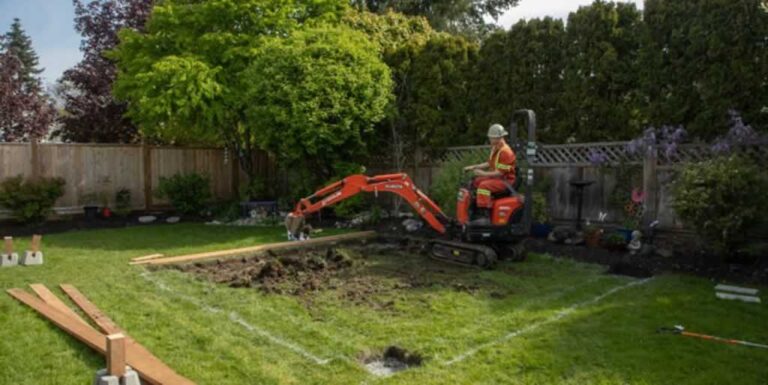
Trommel screens are often used in landscaping, groundwork and gardening to remove unwanted materials from soil. The screens can handle filtering soil, compost, mulch, and wood chips, and the screening process removes any unwanted debris like rocks and large roots, leaving behind a fine, high-quality material that is suitable for use outdoors and can be sold on. Filtering damp or wet soil can cause the holes in the screen to get clogged, preventing finer material from falling through, so a trommel brush is used alongside the screen to remove any dirt and keep the process flowing smoothly.
Construction
Used in the building, construction and demolition sectors, trommel screens are used to clean and separate rubble. Large volumes of rubble are collected and put into the trommel screen machine, which turns and slowly separates small stones, dirt and dust from larger clumps of concrete, leaving only useful materials that can either be resold or reused. Dust and dirt from construction sites can cause the screen to become dirty, so a trommel brush is used during the separating process to continuously remove debris and clean the screen.
Mining and quarrying
In a similar way to how they’re used on construction sites, trommel screens and brushes are used in the mining and quarrying industry to process minerals. The raw materials are fed into the screen, which separates out any smaller rocks and minerals that are unsuitable for further processing. The larger materials are then crushed and fed back into the machine, which separates out the valuable minerals and ore by size. The brushes used alongside the screen help to remove any dust particles to prevent clogging up other machinery further down the refining process.
Trommel brush features
Trommel brushes are a vital tool in the industrial sifting and screening process, used across several sectors from recycling and waste sorting to quarrying and mining. A clogged or damaged drum screen can prevent material from being sorted properly, leaving behind unfiltered product and potentially halting the entire process for cleaning and maintenance. This is why most modern trommel screen machines and systems have heavy-duty brushes that sit along the length of the outside of the drum. With the large rotating drum handling anything from soil and compost to aggregate and concrete, the brush helps to remove excess buildup to keep it clean, reducing downtime and prolonging the lifespan of the trommel screen.
Steel shafts
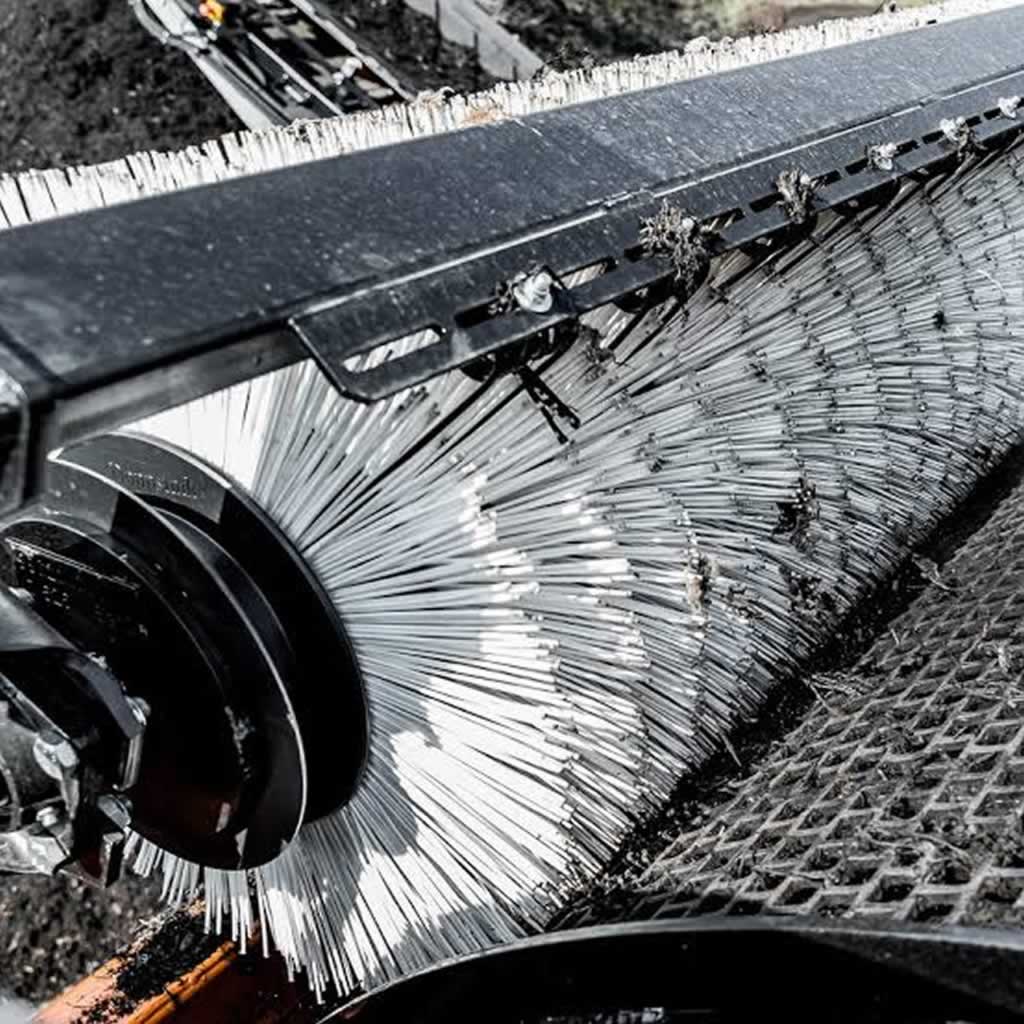
Depending on the brand and type of industrial trommel screen, the accompanying brushes are often manufactured as a strip of synthetic filament bristles which is then wound around a strong metal core, with bearings connecting the brush to the machinery. Traditional trommel rollers have a full-length solid steel shaft and a steel tube surround, which is then covered with the heavy-duty filament coil. The strong shafts have bearings on each end that allow the brush to be mounted onto almost any trommel screen frame or surrounding mechanisms. The steel core creates a stable foundation that allows for a secure, robust brush that can be used in a variety of conditions and sectors, including the quarrying and mining industry. The steel shaft can also be manufactured with adjustable connections that allow the brush to be moved and adapted as required.
Trommel brush bristles
The bristles of a trommel brush are designed to prevent clogging, as the screening drum rotates and the brush continuously sweeps the exterior of the mesh to pop or clear out trapped particles. Made with specialised synthetic filaments, the heavy-duty brushes require specific bristles made from nylon or reinforced plastics and are designed for durability and superior performance. When compared to standard brush filaments, the bristles of a trommel brush are much more hard-wearing, maintain rigidity well, and can be used in both wet and dry conditions. The trommel brush filaments are most commonly available to purchase in 3mm or 5mm thicknesses, with the ideal filament width being the one that is slightly smaller than the size of the holes in the screen it is being paired with. Thin synthetic brush bristles easily remove debris and clear the screen by pushing trapped material back through the gaps in the screen, and the continuous sweeping motion of the brushes prevents further buildup.
Adjustable brushes
The brush attachments can be adjusted to suit the product being sifted. Designed for use with wet or sticky materials, the adjustable brushes effectively remove residue when needed and can be moved further away when they are not required. Moving the height of the brush so the bristles are just close enough to clear the mesh without causing excessive friction prevents the bristles from wearing out. Adjustments should be made regularly to help maintain the brush and account for materials, moisture and seasonal changes. With a large drum, it is often recommended to have multiple brushes along the length of the screen for a continuous clean, especially in messy, industrial environments.