

There’s no question that water is a very flexible medium. How do you choose water features NZ for your outdoor space when there are so many to choose from? As you would with any big structure or part of the garden, ask yourself what it will be used for to help you choose. Will it be a focal point that can be seen from both inside the house and the outdoor living area? Is it to be a fountain that splashes and hides the sound of cars? Maybe a reflecting pool to bring light to a dark corner of the garden. Putting your practical and aesthetic needs in order will help you decide how water can make your garden better.

Check out these beautiful examples to get ideas.
1. Make an entrance
As shown in this Perth garden, water can add drama to a front garden and make a beautiful entrance to the house. On either side of the front terrace is a beautiful water bowl that feeds two ponds. The ponds are surrounded by a variety of native and exotic plants, such as orange-flowering kangaroo paw. In the summer, waterlilies add more colour to the lovely arrangement.
2. Make room for plants
For people who love plants, water is a great way to grow marginal and aquatic plants like the waterlilies and papyrus in this garden. Since chemicals can’t be used in pools and ponds with plants or fish, it’s important to find the right balance between each natural element to keep the water clear and healthy. Most of the time, you need a mix of marginal and deep water aquatic plants.
3. Make the garden look better as a whole
The style of the water features should match the style of the garden and, ideally, the style of the house as well. This country garden in Melbourne has a traditional pond surrounded by a pergola covered with wisteria. This gives the garden a soft, romantic feel that fits well with its rural setting.
4. Make pools into things to look at
Adding a cascade and a tiled weir to each end of this Melbourne swimming pool gives it an extra aesthetic dimension, turning it from a purely functional element into a beautiful decorative feature that can be soothing day or night.
5. Exploit different levels
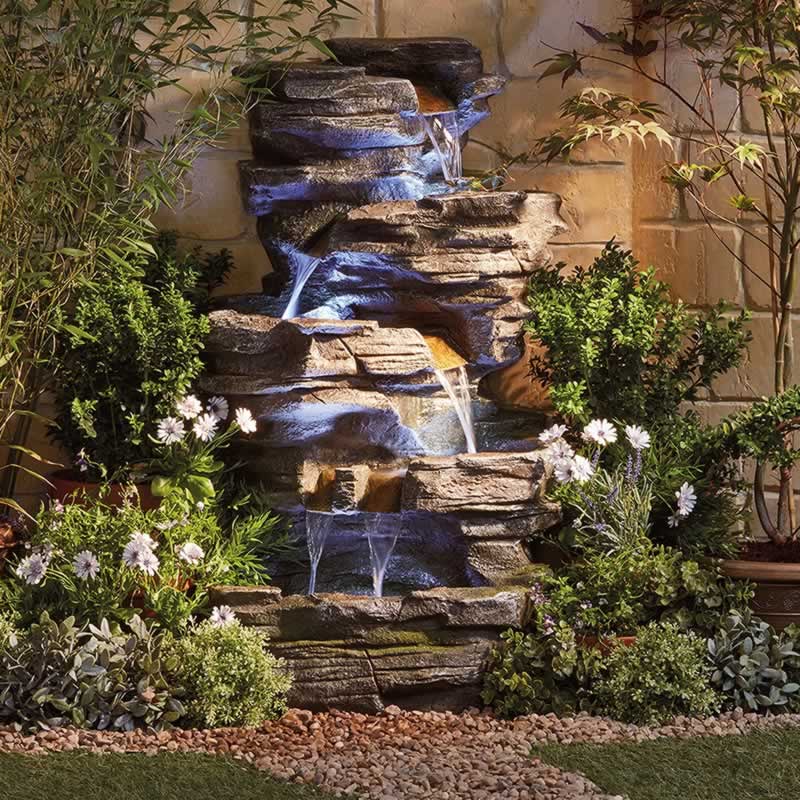
Taking advantage of changes in level in a garden is easy with water. Then becomes part of the ground plane as a pool that can be crossed by stepping stones. At the end of the lower terrace, the stream ends in a weir.
6. Just listen to the sounds
Whether it’s a slow-moving fountain or a fast-moving water chute, the sound of moving water is a great way to drown out other sounds (traffic, neighbours). It can also help set the tone of a garden, from calm to dramatic. Be careful around high waterfalls and chutes, though, because a lot of water moving quickly can be very loud.
7. In tight spaces, use small water bowls
Small spaces, like this tiny tropical garden in Perth, are perfect for water bowls. Water flows into the bowl, which is set on a bed of pebbles. The water then flows over the sides of the bowl and into a reservoir set on a bed of pebbles. The water is then sent back up through the spouts on the wall. The tropical theme is carried on by the frangipani and palms.
8. Add fish to make things look interesting
Goldfish can bring life to even the smallest ponds, and their flashes of bright colour can attract both kids and adults. Mosquito larvae can also be eaten by adding other small fish, like minnows. But don’t put too many fish in your pond because their waste can quickly make the water cloudy. Marginal and aquatic plants will help soak up waste, and they are also important for protecting fish from the sun and birds that might eat them.