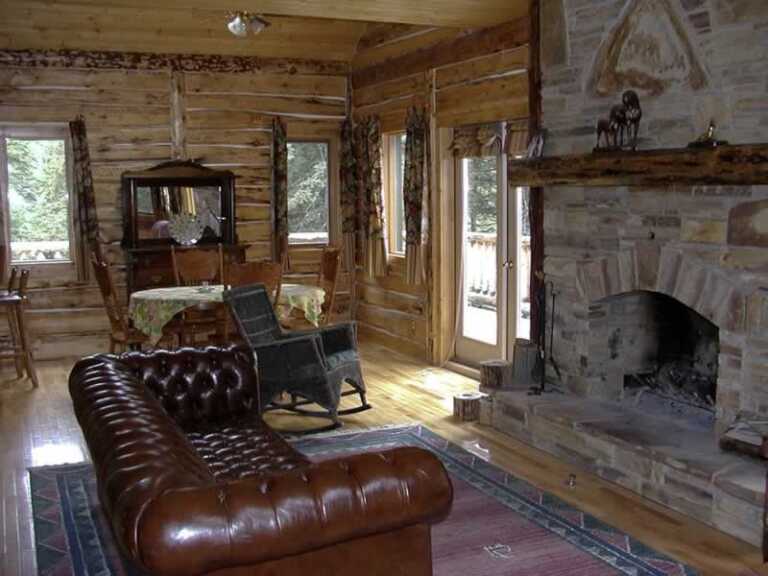

Many homeowners have a preference for wood floors over other materials due to their excellent durability and classic beauty. The main drawback with wooden floors; however, is that they are not excellent at absorbing sound and instead reflect sounds superficially. Therefore, if the floor of your house is made from hardwood, walking through it produces enough sound to cause disturbance to other persons inside.

Fortunately, there are some proper soundproofing methods you can implement, consequently reducing the amount of noise your wooden floor produces. Here are four ways to soundproof your hardwood floor.
-
Carpets and rugs
Carpets usually have a thick pad below which considerably reduces sound penetration to the wooden floor. Having a carpet underlay can help soundproof your floor by not only preventing the transmission of sound up and down but also stopping vibrations from reaching the walls through conduction. Thus, the noise gets dissipated before it penetrates the hardwood floor and transmits to other parts of your home. Moreover, thicker pads and carpets are better at absorbing sound.
If you are not ready to lose aesthetic appeal of your wooden floor and only want to minimize the noise produced by the wooden floor, thick area rugs are the ideal choice. Unlike carpers and pads, you don’t have to cover the entire hardwood floor with these rugs, and they still minimize the noise levels. Additionally, you can make use of this fabric in several spots in your home, like tapestries, hangings, and thick drapes to absorb unwanted sounds.

-
Put rubber floor mats on the wooden floor
If the installed dense and thick carpet is still not working effectively in noise reduction, you should opt for soundproofing mats. These rubber mats are typically positioned below the carpets to guarantee a more reliable soundproofing solution as dense rubber usually has fewer holes in comparison to most woven materials through which sound passes. Furthermore, these rubber mats not only help in soundproofing your apartment, but also in shock absorption plus they don’t slip, making them perfect for gyms. Finally, these mats are relatively affordable, thereby making them an ideal method of soundproofing your wooden floor.
-
Install an acoustic floor underlayment
Acoustic floor underlayment is an extremely thin insulation layer which is typically placed below the carpet, just like floor mats. Subsequently, it offers an additional sound-deadening barrier, proving why it is a remarkable soundproofing technique. When placing an underlayment, you need to ensure it is positioned above a bare vinyl or hardwood floor. One of the best soundproofing underlayment is the LAMINATE Flooring Underlayment which is 3mm thick and made with a vapor barrier. The application of underlayment on your wooden floor is done from wall to wall and secured to your floor’s edge using nails. Repeat this process until you have your entire floor surface covered, cutting material to perfectly fit the size of your room.
-
Interlocking floor mats
These strange and puzzle-looking mats are often used in elementary schools. However, you can also use them for soundproofing your wooden floor inside your apartment. Installing these interlocking mats requires you to start from the corner of the house, and work your way from there. Repeat this process until the entire floor is covered to form what looks like one massive jigsaw puzzle. It is among the cheapest and easiest soundproofing techniques which won’t require plenty of effort and time.