
In Leeds, if you’re looking for new boiler installation options, the most common overall best upgrade will be a high efficiency A-rated combi boiler (usually Worcester Bosch or Vaillant in most properties). Add smart controls with a wireless room thermostat, fit a magnetic filter (our water is hard here in Leeds so it’s a must) and ensure your installer cleans the system thoroughly with a system flush before installing the new boiler. A bigger ‘future-proofing’ upgrade would be to look at air source heat pumps. Check if you qualify for the Boiler Upgrade Scheme (BUS) grant also. Finally, no matter what boiler/getting any system upgrades it pays to look at insulation as well, it’s the best upgrade you can make to any heating system.
Which upgrades are best before or with a new boiler install?
I go into homes across Leeds and am often asked some variation of this question:
“Steve, if we’re paying for a boiler replacement what else should we think about upgrading at the same time?”
It’s a fair question, and with good reason. The boiler is an important part of the heating system, but it’’s not the only factor that affects comfort levels or energy bills.
Modern boilers are also very efficient these days, but to make the most of your new equipment you need to consider controls, protection, and minimising heat loss too.
Below are upgrades I regularly recommend as worthwhile when customers install a new boiler in Leeds homes.
Which boiler type is best for new install?
For most homes in Leeds I encounter (terraces, semi-detached homes and lots of newer builds) upgrading to a high-efficiency combi boiler will often be the best solution.
Why recommend a high-efficiency combi boiler?
High-efficiency combis boilers (typically Worcester Bosch or Vaillant boilers that reach over 90% efficiency in my experience) can be a good choice because:
- They provide instant hot water when you need it
- You don’t need large tanks in the loft, and often not even a hot water cylinder
- They can save space and simplify pipework
- You’ll get **90%+ efficiency
That being said, they aren’t the best choice for every home. Whilst combi boilers cover a lot of scenarios, if you’ve got multiple bathrooms that may be needed at the same time or you regularly want high volumes of hot water you may benefit more from a system boiler and hot water cylinder. The trick is getting sizing and design right. Something I can help with!
Should you fit a magnetic filter with a new boiler installation?
If you take one thing away from this article let it be this: keep that new boiler clean.
Yes, system cleanliness really does matter. Installing a brand new boiler onto dirty pipework is like buying a new engine and fitting it into your car without changing the oil.
Do you need a magnetic filter in Leeds?
In Leeds? Yes. I believe so anyway. Although this is advice many boiler manufacturers and best practice guides recommend as standard. In Leeds, we are considered a **hard water area** so it’’s common for me to find existing heating systems that have a combination of:
- Magnetite Sludge (black iron oxide debris from radiators/ pipes)
- Scale build-up (Worse if you have hard water)
- Random debris from older corrosion components
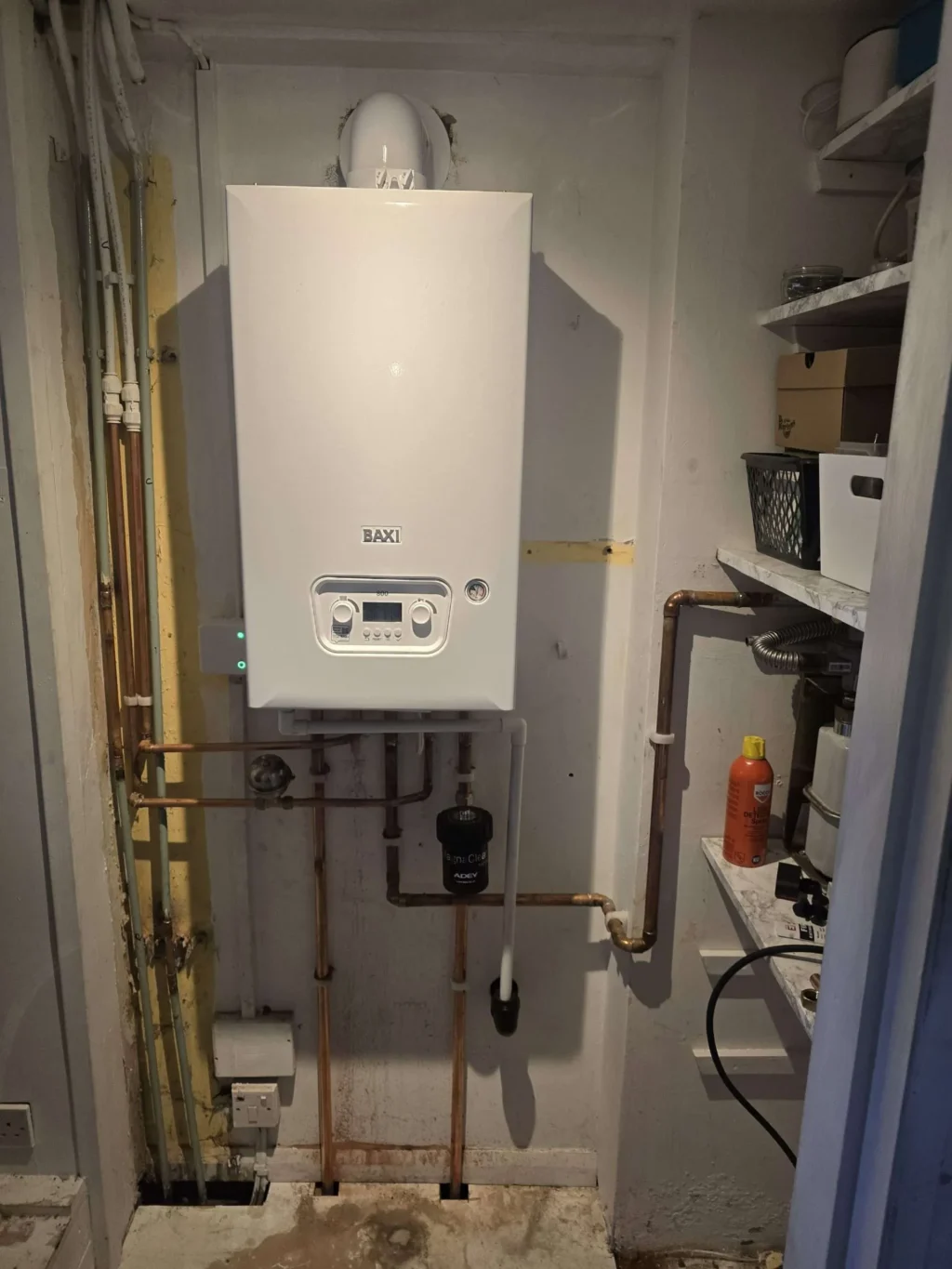
Installing a magnetic filter means you can capture metallic debris before it has a chance to circulate around your boiler. This protects components like the pump and heat exchanger, keeps efficiency higher for longer and helps with warranty requirements (check individual manufacturers terms always).
Should you do a system flush before installing a new boiler?
Yep. I always ensure the system is chemically cleansed or powerflushed depending on the state of the system before I install a new boiler.
Does the system really need flushing?
There’s no set answer for this as system conditions can vary a lot, but think about it this way: If I’m installing a new boiler and connecting it to a filthy system then I’’m just asking for problems. At least take some time to get the system as clean as possible before use.
An engineer could just “swap the boiler” and be done with the job in minutes. But that won’’t get you the best value or longest lifespan from your new equipment.
What can be upgraded on radiators?
Your boiler can only heat your home efficiently if it’’s then able to distribute that heat.
Do I need Thermostatic Radiator Valves (TRVs)?
Yes! TRVs are one of the cheapest and easiest efficiency upgrades there is. They allow you to better control the temperature in each room and reduce wasted heat.
This means you can run cooler temps in bedrooms, heat rooms when you’re actually in them, and avoid overheating rooms that don’’t need it. Keep your room thermostat set for comfort and use TRVs to make heating efficient.
Best boiler upgrade summary: what “tightens up” the boiler install
Here’’s bullet points of the heating upgrades that allow you to “tighten up” a new boiler installation:
- Install a **magnetic filter** to help protect the boiler and maintain efficiency
- Flush/powerclean the system before commissioning
- Install/upgrade TRVs to allow room by room control
- Balance your system so each radiator heats up evenly
Do I need smart controls with a new boiler?
Smart controls can be a great way to make a modern heating system *feel* like an upgrade. But do they actually save you money?
Will smart thermostats save me money on heating?
Many homeowners will see improvements with smart thermostats. Particularly if your existing controls or heating habits are poor.
Typically smart thermostats:
- Can learn your routine (depending on the model)
- Give you remote control from your phone
- Allow easier, more accurate scheduling
- Help cut down on “background” heating
There’s no definitive “best smart thermostat” as it depends on your home, boiler compatibility, and if you want basic scheduling or full on learning thermostats.
Benefits of smart controls
Less wasted heating (better schedules, more convenient tweaks)
More consistent comfort (even temperatures, less hot/cold periods)
Visibility (now you can see what the heating is doing when you’’re not in)
What about a heat pump instead of a boiler?
I get this question more and more as heat pumps become viable for more homeowners.
When should I consider an air source heat pump?
Heat pumps can be a great option if you’re suitable property and want to be future-proof. Heat pumps work best where:
- The property is well insulated
- Heat loss is minimised (good windows/doors/no major draughts)
- Radiators or underfloor heating can provide effective heating at lower temperatures.
If you’re looking at ways to move away from fossil fuels and have other building work planned it can be worth considering heat pumps. Particularly if you are planning other building work at the same time.
What is the Boiler Upgrade Scheme (BUS)?
The **Boiler Upgrade Scheme (BUS)** provides upfront capital grant funding of up to £7,500 (depending on scheme rules) towards homeowners stove swaps in England and Wales to install low carbon heating systems like:
- Air source heat pumps
- Biomass boilers
Check eligibility and apply through the government’’s official services. Please don’’t take advice from tradies or online rumours.
Should I bother with insulation if getting a new boiler?
Top notch boiler installation won’’t save you money if your home is losing heat quicker than your boiler can replace it.
Which insulation upgrades go well with boiler upgrades?
Much like smart controls cavity insulation is one of the best things you can do. If you’’re after fast heating and retention look at:
- Loft insulation
- Cavity wall insulation (if applicable)
- Floor insulation
Leeds City Council also has advice online about what may be available to you through local programs.
Final words from yours truly, Steve.
It’s not just the boiler that matters.
There are lots of ways you can upgrade your heating system when replacing your boiler. But in my opinion, the best new boiler installations take a holistic look at the property.
Install a modern high-efficiency boiler like a Worcester Bosch or Vaillant combi boiler, add smart controls, protect the boiler with a magnetic filter, get the engineer to flush the system and finally, back it all up with some insulation upgrades and you’’ll never look back.
Make sure you plan the job properly and you’’ll notice the benefits every day on comfort, reliability, and energy bills.