Hiring a painter looks simple on the surface. You find a few names, collect a few quotes, pick the one in the middle, and hope for the best. Then the project starts, and the gap between a real professional and a guy with a ladder becomes painfully obvious. Paint bleeds under the tape. The quote you agreed to grows by a thousand dollars. The crew vanishes for three days with your living room half finished. And when the finish starts peeling six months later, the phone number you have stops working.
Almost none of that is bad luck. It is the predictable result of skipping the vetting stage. The good news is that you can filter out the vast majority of problem painters with a short list of pointed questions, asked before any money changes hands. This guide walks through exactly what to ask, why each question matters, what a solid answer sounds like, and the red flags that should make you keep looking.

Why Vetting a Painter Matters More Than You Think
Painting is one of the most commonly underestimated home projects. Because almost anyone can buy a brush and a bucket, the barrier to entry is low, and the market is flooded with operators who range from genuine craftspeople to unlicensed weekend warriors. The price spread between them is often surprisingly small, which means the cheapest quote and the most expensive quote can come from two businesses that operate in completely different universes of quality and accountability.
The cost of getting it wrong is not just cosmetic. Poor surface preparation leads to premature peeling and cracking, which means you pay twice, once for the bad job and again to fix it. An uninsured painter who gets hurt on your property can become your financial problem. And a contractor who underbids to win the job will often look for ways to claw that margin back later, either through change orders or by cutting corners where you cannot see them. Vetting is how you protect both your home and your wallet before the first drop cabinet is opened.
Question 1: Are You Licensed and Insured in My State?
This is the non-negotiable opening question, and it should come before anything about color or price.
Why It Matters
Insurance is the single most important protection you have as a homeowner. A properly insured painting company carries both general liability coverage, which protects your property if something gets damaged, and workers’ compensation, which protects you if a crew member is injured on your job. Without that second piece, an injured worker can pursue the homeowner directly. That is a risk no fresh coat of paint is worth.
Licensing requirements vary by state and municipality, but a licensed contractor signals a business that is registered, accountable, and operating in the open rather than off the books.
What a Good Answer Sounds Like
A real professional answers this without hesitation and offers to send proof. They do not get defensive, and they do not treat it as an insult. Established painters expect this question and have a certificate of insurance ready to forward. For example, an Arvada, Colorado company like Bighorn Painting leads with the fact that it is fully licensed and insured in the state, carrying both liability coverage and workers’ compensation, precisely because they know informed homeowners are looking for it.
Red Flags
Be wary of any contractor who is vague about coverage, says insurance is “handled” without specifics, or pressures you to skip the paperwork to save time. “I’ve never had a problem before” is not an insurance policy.
Question 2: Can You Give Me a Detailed, Written Estimate?
Never hire on a number scribbled on the back of a business card. The estimate is a preview of how the entire project will be run.
Why It Matters
A detailed written estimate tells you whether the painter has actually thought through your project or is simply guessing. It also protects you from the most common painting complaint of all: the price that mysteriously climbs once work is underway. A real estimate should spell out the scope, the surfaces included, the number of coats, the paint products to be used, the prep work involved, and the timeline.
What a Good Answer Sounds Like
The best contractors do an in-home assessment before quoting, because an accurate price is impossible without seeing the surfaces, the square footage, and the condition of the walls. They then provide a transparent, itemized quote with no hidden fees, and crucially, the price they quote is the price you pay. Upfront, fixed pricing has become a genuine differentiator in this trade, because so many operators rely on the lowball-then-upcharge model.
Red Flags
Quotes given over the phone without anyone seeing the space, prices that seem dramatically lower than every other bid, and any reluctance to put the numbers in writing are all signs to walk away. A suspiciously low bid is rarely a gift. It usually means thin prep, cheap paint, or a change order waiting to happen.
Question 3: What Does Your Surface Preparation Process Look Like?
Ask this and listen closely, because the answer separates the craftspeople from the cover-up artists faster than any other question.
Why It Matters
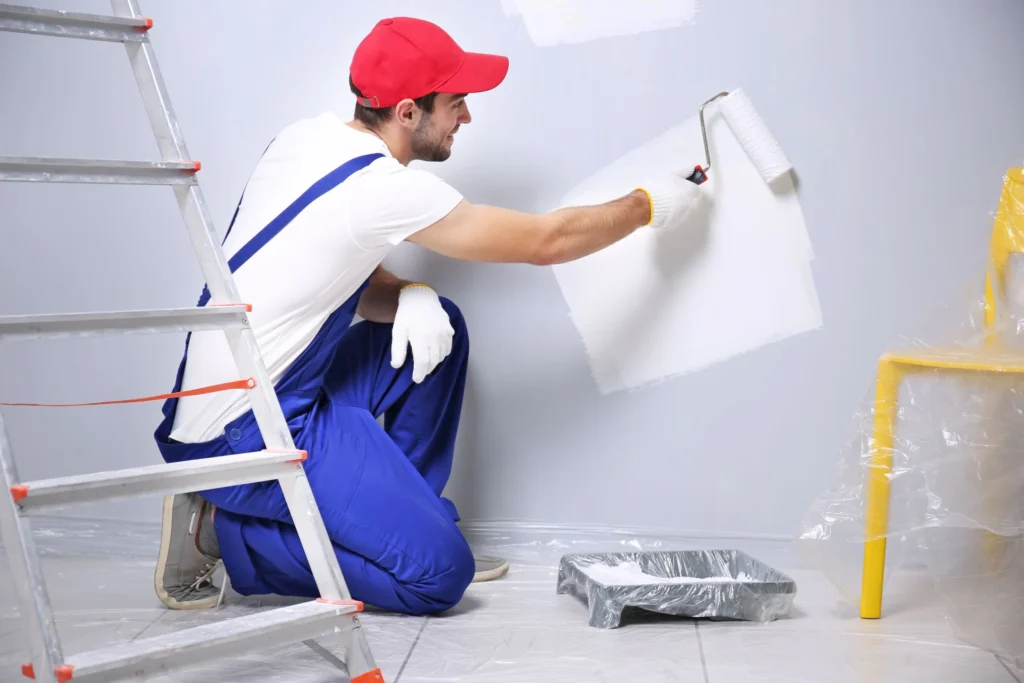
Professional painters will tell you that a paint job is roughly eighty percent preparation and twenty percent painting. The finish you see and pay for is only as good as the work that happened before the first coat. Skipping prep is the number one reason paint fails early. Proper preparation includes cleaning and power washing, scraping and sanding, filling cracks and holes, patching drywall, and priming where needed.
What a Good Answer Sounds Like
A pro will describe a clear, multi-step prep sequence without being prompted, because it is central to how they work. They will talk about washing surfaces, repairing imperfections, protecting your floors and furniture, and taping clean edges. A strong process typically runs as a defined sequence: free consultation and assessment, thorough surface preparation, careful application with daily cleanup, and a final inspection before sign-off.
Red Flags
If a painter talks only about the painting itself and glosses over prep, or quotes a timeline that is obviously too short to include real preparation, that is a problem. Fast and cheap almost always means the prep got cut.
Question 4: What Paint Products Do You Use?
Not all paint is created equal, and the brand and grade a contractor uses tells you a lot about the result you will get.
Why It Matters
Premium paints cost more, but they cover better, last longer, and resist fading, cracking, and moisture far more effectively than budget products. A contractor who quietly uses the cheapest contractor-grade paint to protect their margin is handing you a finish that will look tired years sooner than it should. This matters even more in harsh climates, where sun, temperature swings, and weather punish exterior finishes.
What a Good Answer Sounds Like
Professionals are happy to name their products and explain why. Top painters typically work with trusted premium brands such as Sherwin-Williams and Benjamin Moore, and a good contractor will also accommodate a preferred brand if you have one. They can explain why a particular product suits your surfaces and your local conditions.
Red Flags
A painter who cannot or will not name the paint they plan to use, or who dismisses the question as unimportant, is one to avoid. The phrase “good quality paint” without a brand or line behind it means nothing.
Question 5: Do You Offer a Warranty, and Is It in Writing?
A warranty is where a painter puts their money where their mouth is. It is also one of the clearest signals of how confident they are in their own work.
Why It Matters
Paint problems frequently show up months after the crew has left, when peeling, bubbling, or cracking from poor application or prep finally surfaces. A written warranty means the contractor will come back and fix craftsmanship defects at no cost to you. A verbal “we stand behind our work” promise is worth exactly nothing once the invoice is paid and the relationship cools.
What a Good Answer Sounds Like
Strong contractors offer a written warranty covering both labor and materials and explain the terms clearly during the estimate. The length varies by company and project, but the key is that it exists on paper. Bighorn Painting, for instance, backs its interior painting work and other projects with a written craftsmanship warranty, which gives homeowners documented recourse rather than a handshake.
Red Flags
No warranty, a warranty that exists only in conversation, or vague terms that the contractor cannot explain are all warning signs. If they will not write it down, assume it does not exist.
Question 6: Can You Share Reviews, References, and Recent Work?
A painter’s past clients are the closest thing you have to a test drive.
Why It Matters
Online reviews and direct references reveal the patterns that a single conversation cannot. One glowing review is anecdotal. Dozens of consistent reviews praising the same things, fair pricing, clean crews, on-time completion, tell you what to actually expect. References let you ask pointed questions of people who have already lived through the experience.
What a Good Answer Sounds Like
A reputable company has a visible track record and is glad to share it. Look for a strong aggregate rating across a meaningful number of reviews, not just three or four. A painter with dozens of consistent five-star reviews and a willingness to provide references or photos of recent projects is showing you exactly who they are.
Red Flags
No online presence, a tiny number of reviews, reluctance to provide references, or a portfolio that consists of stock photos rather than the contractor’s own work should all give you pause.
Question 7: How Do You Handle Scheduling and Communication?
The quality of the finish matters, but so does the experience of living through the project.
Why It Matters
A painting job happens inside your home, around your routine, your family, and your furniture. A contractor who disappears for days, shows up unannounced, or goes silent when you have a question turns even good work into a stressful ordeal. Reliable scheduling and clear communication are a core part of professionalism, not a bonus.
What a Good Answer Sounds Like
Pros set expectations early. They tell you when they will start, roughly how long it will take, and how they will keep you informed along the way. Many provide updates throughout installation and commit to arriving as planned and finishing within the agreed deadline. They clean up daily rather than leaving your home as a worksite.
Red Flags
Difficulty getting a callback during the quoting stage is a preview of the whole project. If they are hard to reach when they are trying to win your business, expect worse once they have your deposit.
Putting It All Together: Your Painter Vetting Checklist
Before you sign anything, make sure your chosen painter clears every one of these:
- Licensed and insured in your state, with proof of both liability and workers’ compensation.
- Detailed written estimate with fixed, transparent pricing and no vague line items.
- Clear preparation process that treats prep as the bulk of the work.
- Named premium paint products suited to your surfaces and climate.
- Written warranty on labor and craftsmanship, with terms explained.
- Strong reviews and references across a meaningful number of past clients.
- Reliable scheduling and communication demonstrated from the first contact.
A painter who answers all seven confidently and in writing is the rare professional worth hiring. One who stumbles on even two or three is showing you the problems ahead before you have spent a dime.
The Bottom Line
The cheapest quote is almost never the cheapest project. The real cost of a paint job includes everything that happens after the crew leaves: how long the finish lasts, whether the warranty is honored, and whether you have to do it all again in two years. Vetting your painter properly is the closest thing to insurance you have against all of it.
Take the extra hour to ask these questions before you hire. Companies that have built their reputation on transparency, proper licensing, premium materials, and written guarantees will welcome every one of them, because answering well is exactly how they win your trust. The ones who hope you will not ask are the ones you most need to.




The part about the hidden costs really resonated with me. It’s so frustrating when a project starts at one price and suddenly balloons due to unexpected fees. I wish more people shared their experiences so we could all avoid those pitfalls!