
A shed is a versatile fixture for any home and serves a few purposes for your property. You can keep your plants, store garden tools and seasonal outdoor décor, use them as storage for outdoor gear, and even an office. But suppose you’re living off the grid. In that case, you’ll need an alternative energy source to power it if it’s situated away from the house. Wiring can pose a challenging, expensive project.

When you want more for your shed, here’s how you can supply it with the power it needs.
How Much Power Does A Shed Need?
The answer to this question relies on the kind of off grid systems you install and the shed’s purpose. Will you use it for leisure? Does it need heating, internet connection, lighting, power tools, or other hardware? Calculate the power requirements first to determine the type of system you need. Let’s use a mobile phone charger that runs on 5 watts (5W). It needs an inverter that has a 150W of continuous power rating. You’ll need at least 600W for a 400W desktop computer. Add the wattage of all equipment you use to get the inverter’s power rating. In this case, you’ll need an inverter with a power rating of 750W (600W + 150W).
Decide On A Preferred Power Source
One crucial requirement when going off the grid is your power source. You’ll need to power essential appliances and a few creature comforts. Two renewable power sources you can choose are solar and wind power. Here’s how the two differ:
-
Solar Power
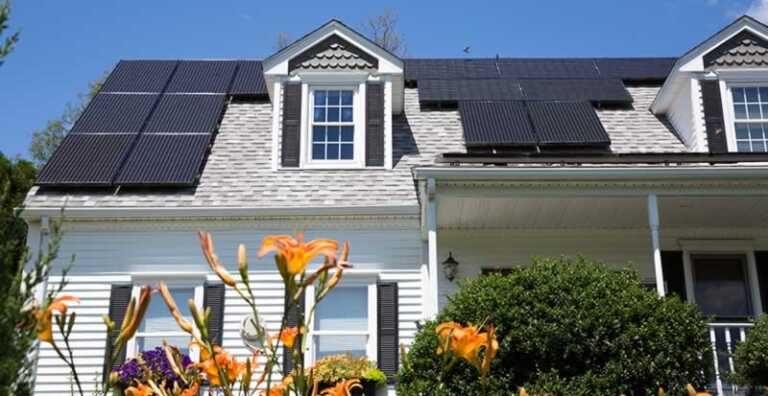
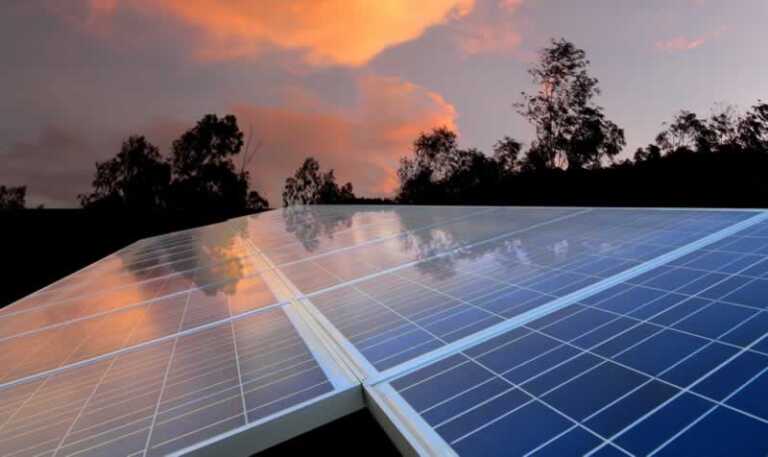
Solar power is a renewable energy source that works by harnessing the sun’s power through solar panels. The solar panel’s silicon semiconductors trap photons from the sunlight. These photons create an electrical current delivered through the bottom of the panels and stored in batteries for use later. One quick way to estimate the power your shed needs is by looking at your home’s electric bill. Still, it’s different in the case of the shed. You must calculate the power demand of the lighting or equipment.
Search for charts detailing the power consumption of specific electrical appliances or equipment online. That way, you can get an inverter with a suitable power rating. Here’s a sample chart for your reference:
- LCD TV: 150W
- Plasma TV: 200W
- Video game console: 150W
- Satellite dish: 25W
- 14″ bandsaw: 1100W
- 1/4″ drill: 250W
- Hedge trimmer: 450W
- 40W-equivalent LED bulb: 10W
- Laptop: 100W
- LCD monitor: 100W
The ones listed above are the power consumption of the most commonly used devices at home, according to Consumer Guide to Home and the General Electric website. To create an estimated power consumption for your shed, you must use nine hours, which is the standard, plus powering a tool or device for an hour each. Add a lighting system, such as an LED lightbulb with a 40-watt equivalent, for example:
40W-equivalent LED bulb × 4
- Power (W): 40W (10W each bulb)
- Daily Usage Hours (h): 9
- Power Consumed (Wh): 400
For this example, let’s add a drill and a laptop:
Drill:
- Power (W): 250W
- Daily Usage Hours (h): 1
- Power Consumed (Wh): 250
Laptop:
- Power (W): 100W
- Daily Usage Hours (h): 1
- Power Consumed (Wh): 100
Now, we’ll add the power each device consumes:
400Wh + 250Wh + 100Wh = 750Wh
In this calculation, the estimated consumption is 750Wh, or 7.50 kWh, while working nine hours in the shed. You’ll use this number to calculate the size of a photovoltaic (PV) system. Use this calculation with regular power usage in the shed to get the load size you need for all your equipment.
The example only shows three devices. Calculate your devices, your lighting system, and how many hours you use each.

-
Wind Power
You can opt for wind energy at a location with strong winds. Wind turbines harness the power and need a steady breeze to keep the turbine blades turning. Most turbines allow for pole or roof mounting. When the wind pushes the turbine blades, it also spins the driveshaft and, in turn, spins the generator. The generator is located at the back end of the blades, connected to the main shaft, the gearbox, and the high-speed shaft. The turbine blades should be in the position of getting as much wind as possible to keep the turbine spinning constantly. The main shaft where the blades are attached must continuously rotate. The gearbox or gearing helps turn the shaft’s movement to generate electrical current. Think of it like winding the handle of a dynamo and using electromagnetic induction. The rotating coil inside a magnetic field generates electricity. The shafts spin as the blades keep turning, rotating the magnet in the coil inside the generator, which produces electricity.
Takeaway
You can take your shed off the grid by determining how much power it needs. But first, decide what you want to do with the shed. Next, consider what equipment you’ll put inside it. Last and most importantly, decide on the power source, solar or wind. Keep in mind that solar power requires solar panels. Again, you calculate the power demand to determine the load size. Wind turbines, however, require wind to spin its generator constantly. If your location has strong winds, you can keep generating electricity with wind turbines. Either option is a renewable source of energy you can learn to harness efficiently for a near-unlimited power supply in your life off the grid.