
So, you’re thinking about building your own timber frame home. Maybe you’ve seen the photos—vaulted ceilings, exposed beams, rustic-meets-modern charm—and thought, “Hey, I could build that.”
We love that energy. But before you grab your tool belt and start shopping for a hard hat, let’s walk through what it really takes to build a timber frame kit, step by step. No sugarcoating, no builder-speak—just a good old-fashioned reality check (with some encouragement along the way).
Step 1: Ordering the Kit
Difficulty: Easy to Medium
Time: A few weeks for planning and delivery
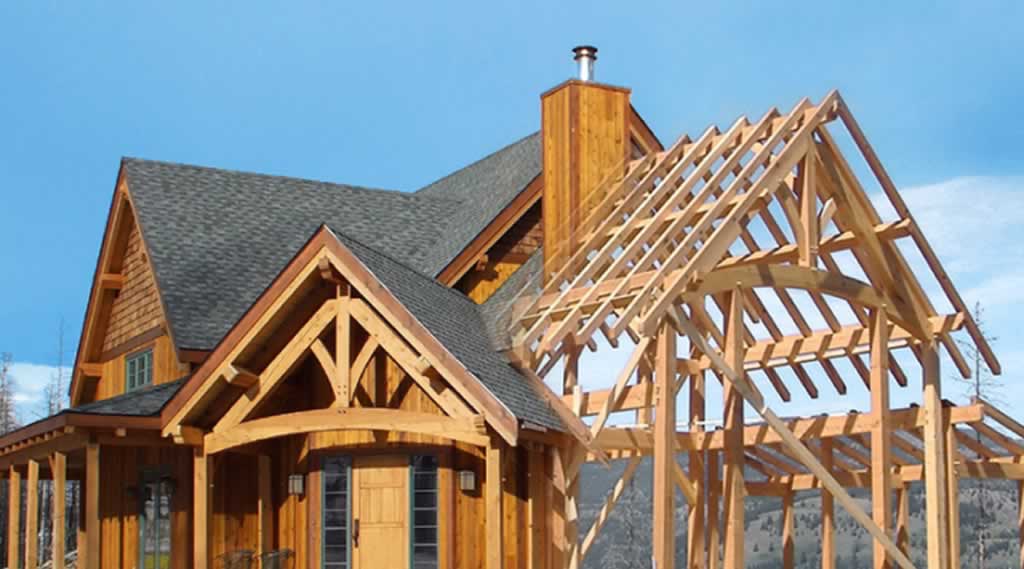
Here’s the good news: Timber frame home kits are engineered for simplicity. You’re not starting from scratch. The design is pre-planned, the timbers are pre-cut, and the joinery is (usually) mortise-and-tenon, meaning it fits together like a giant, grown-up Lincoln Log set—with more precision and fewer snack breaks.
When you order a kit from a reputable company, you’ll typically get:
- Pre-cut and labeled timbers
- A detailed set of plans and drawings
- Hardware and connectors (depending on the company)
- Instructions that are far more intuitive than your last IKEA experience
Some kits also offer structural insulated panels (SIPs) for energy efficiency—something to consider if you don’t want your heating bill to feel like a second mortgage.
Step 2: Site Prep & Foundation
Difficulty: Medium to Hard
Time: 1–2 weeks
Unless your backyard happens to be perfectly flat and ready to go (lucky you), you’ll need to clear the site and pour a foundation. Most timber frame kits are built on concrete slab or crawlspace foundations.
This is where your DIY dreams either accelerate or hit pause. You’ll likely need:
- Grading equipment or a contractor for site leveling
- Concrete forms and pours (this is usually not the place to experiment unless you’ve done it before)
- Coordination with local building codes and inspectors
If you’re handy but not licensed, consider hiring out this part—it’s the platform everything else rests on.
Step 3: Frame Raising
Difficulty: Moderate (with help)
Time: 2–5 days, depending on size
Here’s where the magic happens. The timbers show up. They’re beautiful. They smell like craftsmanship. And now… you have to raise them.
This part is totally doable, but you will need help. Timber frame kits involve large, heavy beams—think 500 lbs or more per piece for the big ones.
You’ll want:
- A few strong friends (or a crane operator)
- Scaffolding or ladders
- Rope, ratchet straps, and patience
- At least one person who’s good at reading plans upside down in the wind
The good news? Once you start, the structure comes together fast. Like “we raised the frame in three days” kind of fast.

Step 4: Enclosing the Structure
Difficulty: Moderate
Time: 1–2 weeks
If your kit includes SIPs, they’ll be custom-cut to fit your frame. These act as your walls and insulation all in one, and they’re part of why timber frame homes are known for being up to 60% more energy efficient than traditional builds.
You’ll need to:
- Follow the layout plans to install SIPs
- Seal the panels tightly to maintain efficiency
- Install roofing materials, windows, and doors
This part of the process is where it starts to look like a real home—and where your neighbors stop thinking you’re building an oversized shed.
Step 5: Finishing Touches
Difficulty: Varies
Time: Depends on how custom you go
Now you’re into the home stretch: interior walls (if you want them), flooring, plumbing, electrical, and all the fun stuff like kitchen cabinets and bathroom tile. Depending on how handy you are, you might do a lot of this yourself—or tag in the pros for electrical and plumbing.
The frame itself is doing the heavy lifting (literally), which gives you freedom to customize the layout without worrying about load-bearing walls. Want an open-concept kitchen and living space with a loft overhead? Go for it.
So… Is It Hard?
Let’s call it like it is:
- If you’re a seasoned DIYer with a few builds under your belt: Totally doable. Expect some long days and maybe a few sore muscles, but it’s a dream project you’ll be proud of forever.
- If you’ve never built anything more complicated than a deck: Still possible—but you’ll need help, patience, and maybe a contractor for the trickier parts.
- If you think timber framing involves a nail gun and a YouTube video: We love your enthusiasm, but this might be a team effort.
Final Verdict: A Worthy Challenge
Building a timber frame kit is a big project—but it’s also incredibly rewarding. You’re creating something timeless, beautiful, and structurally sound enough to outlast your grandkids (and their grandkids).
If you’re up for the challenge, timber frame kits offer an amazing blend of tradition and modern convenience. Just be ready to roll up your sleeves—and maybe call in a few favors from friends with strong backs.