
Loud noises squeaks coming from opening the garage door could be showing there is something wrong. An activity that is expected to be easy becomes a frustrating issue. This might cause a full breakdown of the system or even prove safety-hazardous once ignored. With early identification of the signs, you can act before the condition gets out of control. Five red flags that will guide you to know that it is time to call in a professional to work on your garage door system are as follows.
1. Weird Clanks, Squeaks, and Muffled Groans Calling Attention to Submerged Wear
Unusual, consistent, and erratic noise communication upon opening and closing the door that connects to stress and friction when there ought to be none. Metal-on-metal contact creates unpleasant screeches that get louder over time when rollers bind in their tracks or springs overwork under stress. Every time wires slightly slip on pulleys, or when nuts loosen in important joints, you’ll hear clanking. These noises are direct messages from gears and bearings under stress, not just annoying noises. Ignoring them increases wear and increases the chance of unexpected part failure by allowing friction to produce heat. A professional examination will identify malfunctioning parts, swap out worn components, and bring back the silent accuracy your door was intended to provide.

2. Evident Sagging and Misalignment Signaling an Upcoming Failure
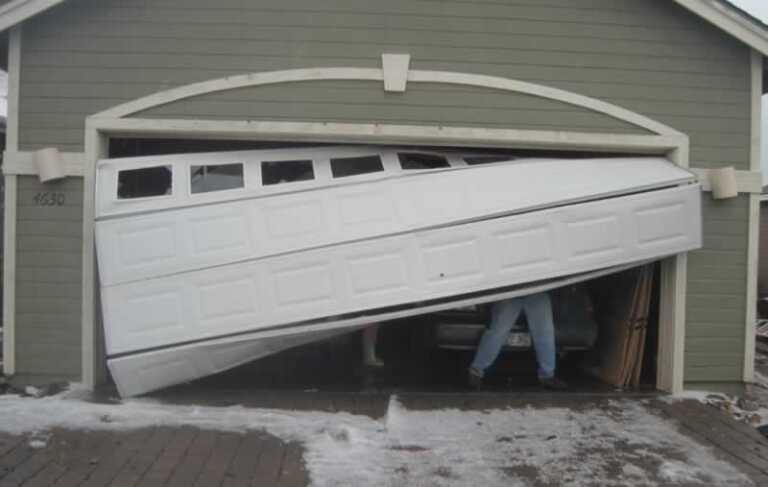
A garage door that is precisely positioned should glide smoothly from side to side and completely seal its frame. The tension in the springs and cables becomes uneven when one side starts to droop, or the door tilts slightly. There can be a small arched form or a growing opening in the upper corner that wasn’t there previously. This misalignment will be further worsened with time, leading to binding and further straining on the motor, hence a safety risk in case the door falls off its track. Such weaknesses can be observed during the day or at night by using a torch along the track; any deviation would show that the required adjustments of the track, re-tensioning of the track, or repair of the components is needed to prevent a total collapse.
3. Slow Reaction and Disruptions to Upward and Downward Movement
The opener’s motor and sensors transmit distress when it pauses, hesitates, or takes several button presses. Smooth motion should be started with a quick press; if there is a slight delay before any movement, the driving mechanism may be having trouble with worn gears or an overloaded chain. Safety sensors identify excessive resistance, which is frequently brought on by warped panels or failed springs when there are abrupt reversals or pauses mid-cycle. To ensure that every button press results in a confident, definitive move, schedule service to adjust sensitivity settings, correct sensor misalignments, and overhaul mechanical assemblies rather than repeatedly forcing the door through orders, which increases mechanical stress.
4. Signaling Loosened Hardware with Excessive Shaking and Vibration
An adequate garage door actually operates in a surprisingly smooth fashion. At each intersection, you will hear a rattle, and you will feel the tremors through the opener as the panels shake because the bolts, brackets, or hinges are loose. When the door moves, the whole thing vibrates since the slightest increase in flexibility in the torsion spring bracket causes the stress to go unevenly. Vibration, at some point, leads to metal fatigue and cracks, which expose the metal to the risk of catastrophic failure. You can test this by observing how the door has been moving when you are inside the garage; in case you can observe panels shaking or frames clinging off their frame posts, this is at once necessary to have the worn-out hardware tightened, oiled, and replaced.

5. Rust and Surface Damage That Destroy Structural Integrity
One might consider shallow pinprick-like rust spots, corrosive streaks of residue, or even paint flakes as purely an aesthetic problem. However, all of this is the symptom of a more serious problem relating to the metal itself. Although rusting on the sealing part of the bottom allows moisture to seep into wood or composite, causing rotting or delamination, rusting on hinges and roller mounts eats away at bearing surfaces. Wear occurs, and the concentrations of metal dust and flakes point to slower erosion of the moving parts, even when the arrangements that include artificial flowers are placed on a neighboring shelf. To repair broken panels, corrode the hardware, and add protective finishes that would help avoid further deterioration, one must arrange a garage door repair in Los Angeles if you reside there.
Conclusion
Your garage door locks up and unlocks your house and provides the convenience of everyday life. Watch out for these five warning signs, act fast when they appear, and ensure perfect operation over many years.